

Turning Every Table Into an Opportunity, Not a Sales Pitch
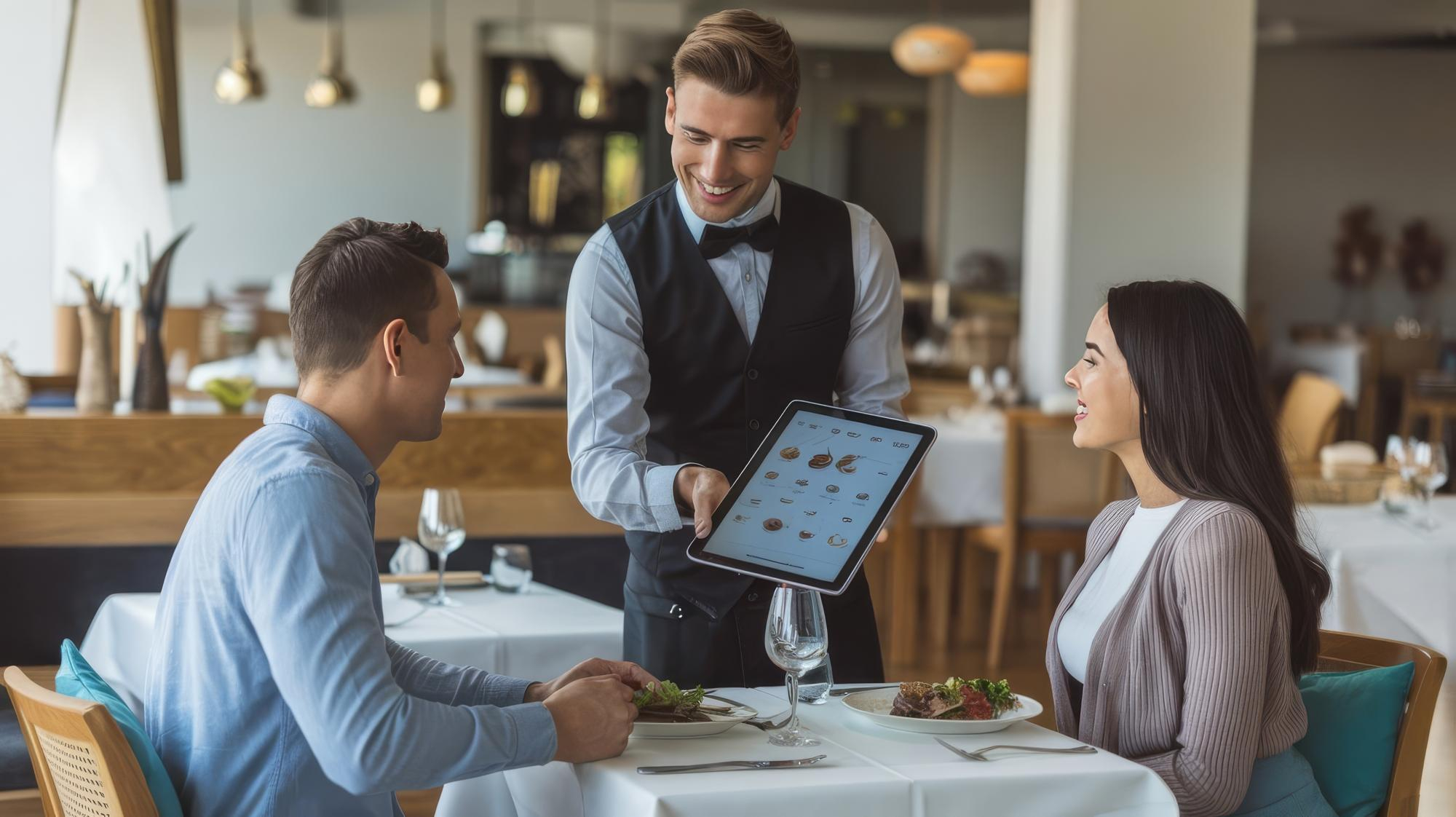
A guest sits down, glances at the menu, and asks the server what’s good tonight. That single moment holds more revenue potential than most restaurant owners realize. The way a server answers that question, calmly, confidently, and with genuine knowledge of the menu, can quietly shape the size of the final bill without the guest ever feeling like they were sold to.
This is the real idea behind restaurant upselling techniques: not pressuring diners into ordering more than they want, but guiding them toward choices that genuinely enhance their meal. Done well, it feels like attentive service. Done poorly, it feels like a script being read aloud, and guests notice the difference instantly.
Average check size is one of the few revenue levers a restaurant can influence without spending a single dirham on advertising. Every recommended appetizer, every suggested wine pairing, every well-timed dessert mention adds up, not just for one table, but across dozens of covers a night, night after night. Over a month, that difference becomes substantial. Over a year, it can be the gap between a restaurant that merely survives and one that genuinely grows.
This guide breaks down the specific techniques, timing, and psychology behind upselling that works, along with how menu design and staff training quietly support (or undermine) a server’s ability to sell well.
What Is Restaurant Upselling (And Why It’s Different From “Hard Selling”)?
Upselling gets a bad reputation because most people associate it with pushy sales tactics, but in a restaurant setting, that association is exactly what servers need to avoid.
It helps to separate a few terms that often get used interchangeably:
- Upselling means guiding a guest toward a higher-value version of something they already want, such as recommending a larger portion, a premium cut, or an aged wine over the house pour.
- Cross-selling means suggesting an addition that complements the original order, like a side dish, a sauce, or a drink pairing.
- Suggestive selling is the broader umbrella term covering both, and it describes the overall practice of recommending items during service rather than waiting passively for guests to decide alone.
The distinction matters because guests respond very differently depending on how a recommendation is framed. A suggestion that sounds like genuine advice, “the lamb shank pairs really well with the red we have by the glass tonight”, lands completely differently than “would you like to add a drink to that?” One feels like hospitality. The other feels like a transaction checklist.
Even small, consistent increases in average check size compound quickly. A server who adds just a few dirhams of value per table, spread across dozens of covers a shift, contributes meaningfully to nightly revenue without ever increasing the price of a single menu item.
Why Upselling Matters More Than Ever for Restaurants?
Rent, utilities, staffing, and ingredient costs have all been climbing steadily across the region’s F&B sector, and margins in this industry have never been generous to begin with. Most restaurants operate on net margins in the single digits, which means every additional dirham per cover matters far more than it might appear on paper.
Raising menu prices is one option, but it’s a blunt instrument. Guests notice price increases, and if not handled carefully, they can affect perceived value and repeat visits. Restaurants exploring how to grow revenue without alienating regulars often look at more nuanced approaches, including adjusting prices for the same item depending on demand, time of day, or ordering channel, an approach covered in more depth in FnB Insight’s breakdown of dynamic pricing strategies for restaurants navigating exactly this challenge.
Upselling offers a gentler, more sustainable lever. It doesn’t change what’s printed on the menu. It simply changes how effectively that menu gets communicated at the table, which is something entirely within a server’s control, shift after shift.
The Psychology Behind Effective Upselling
Before getting into specific phrases and techniques, it helps to understand why some approaches work and others fall flat. Selling more isn’t really about persuasion tactics; it’s about understanding what guests actually want from the interaction.
Guests Want Guidance, Not Pressure
Most diners, especially those unfamiliar with a menu, genuinely want direction. Ordering can feel overwhelming when a menu has thirty or forty items, several of which sound equally appealing. A server who steps in with a confident, specific recommendation isn’t intruding, they’re solving a real problem the guest is quietly experiencing.
The difference between guidance and pressure usually comes down to the intent behind the words. Guidance sounds like it’s coming from someone who cares whether the guest enjoys the meal. Pressure sounds like it’s coming from someone who cares whether the bill is bigger. Guests can tell the difference within a sentence or two, often without consciously realizing why.
The Power of Specific Recommendations Over Generic Ones
“Would you like anything else?” is one of the weakest upselling questions in the industry, and it’s also one of the most common. It requires the guest to do all the mental work: recall the menu, decide what sounds good, and initiate the request themselves. Most guests will simply say no, not because they don’t want anything else, but because generating a specific answer feels like effort.
Compare that to: “A lot of our guests pair the grilled sea bass with the truffle mash on the side, it works really well together.” This gives the guest something concrete to react to. It’s far easier to say yes to a specific idea than to generate one from scratch.
Timing Affects Receptiveness
The exact same suggestion can succeed or fail depending purely on when it’s offered. A dessert recommendation delivered while guests are still finishing their mains will almost always be declined, not because they don’t want dessert, but because their attention is elsewhere. The same suggestion, offered a few minutes later once plates are cleared, often gets a completely different response.
Simple Upselling Techniques Every Server Should Know
These core techniques form the practical foundation for turning ordinary service into an opportunity for both better guest experience and stronger revenue. None of them require scripts, gimmicks, or aggressive framing, just intentional habits applied consistently.
Suggest Before They Ask
Waiting for a guest to ask “what do you recommend?” means missing the majority of guests who never ask that question at all. Proactively offering a suggestion during the greeting or drink order opens the door naturally.
- “Can I start you off with something from the bar, maybe our lychee mojito? It’s been popular this week.” Introduces a drink upsell before the guest has even opened the menu.
- “While you’re deciding, our burrata starter is a great way to begin, it’s made fresh daily.” Fills the thinking gap with a low-pressure, specific suggestion.
Use Descriptive, Sensory Language
Simply naming a dish rarely sells it. Describing it does. “Grilled salmon” is a menu item. “Grilled salmon with a lemon butter glaze, served over charred asparagus” is an experience a guest can picture before it even arrives.
Servers who genuinely know how a dish tastes, what it’s served with, and what makes it distinct from similar options tend to upsell naturally, simply because they’re describing something they understand rather than reciting a name off a laminated card.
Offer Two Choices Instead of One
Asking an open-ended question like “would you like a drink?” invites a simple no. Offering two specific options changes the psychology entirely: “Would you like to try our sparkling rosé or the house red tonight?” This no longer forces the guest to decide whether they want something; it assumes they do and simply asks which one.
This is a well-documented principle in choice architecture: guests presented with a manageable choice between two good options are more likely to select one than guests asked an open-ended yes-or-no question.
Pair Recommendations Naturally
Pairing suggestions work best when they feel like genuine culinary advice rather than an upsell attempt. A few reliable pairing moments include:
- Drinks with starters: suggesting a specific wine, mocktail, or beer that complements the appetizer being ordered.
- Sides with mains: recommending a side dish that rounds out the main course, especially for proteins that are often served with underwhelming default sides.
- Desserts at the right moment: waiting until plates are cleared before mentioning the dessert menu, rather than during the main course.
Highlight Limited or Seasonal Items
Scarcity naturally draws attention. Mentioning that a dish is a seasonal special, limited to certain months, or only available while a particular ingredient is in season gives guests a reason to try it now rather than putting it off.
A few quick reference phrases servers can adapt to their own voice:
- “This is only on the menu for a few more weeks, it’s one of our most requested seasonal dishes.”
- “Can I tempt you with our chef’s special tonight? It’s not always available.”
- “The lamb tagine is made in small batches, so it tends to sell out early in the evening.”
Timing: When to Upsell During the Guest Journey?
Understanding what to say matters less than understanding when to say it. The same recommendation can land completely differently depending on where the guest is in their meal.
At the Table (Welcome Drinks, Starters)
The earliest moments of service set the tone. This is the ideal window for suggesting welcome drinks, shareable starters, or a specific appetizer that pairs with what the guest has already indicated interest in.
During the Main Course Order
Once a guest has chosen their main dish, that’s the moment to introduce complementary sides, sauces, or premium ingredient upgrades, such as adding a protein topping or upgrading a cut of meat. Guests have already committed mentally to a category of food, which makes complementary additions feel logical rather than intrusive.
Dessert and After-Meal Upsells
Dessert and after-dinner drink suggestions perform far better once the main course plates have been cleared. At that point, guests have mentally shifted toward what’s next rather than still being focused on their current course, making them naturally more receptive to hearing about what else is available.
How Menu Design Supports (or Hurts) Server Upselling?
Even the most skilled server is working against the menu itself if it’s poorly structured. Item placement, descriptive language, and visual hierarchy all quietly influence what guests notice and, by extension, what servers find easy to suggest.
A menu built around clear, appealing descriptions gives servers something to work with. When a dish description already does half the selling, “slow-roasted for six hours, finished with a rosemary jus”, a server simply reinforces what’s already on the page rather than inventing a pitch from scratch. This overlaps closely with the principles behind menu engineering, where item placement and pricing psychology are used to guide guest attention toward higher-margin dishes before a server even says a word.
Menu development itself plays a similar role. A menu that’s been thoughtfully built, rather than simply expanded over time with whatever seemed popular, tends to have a clearer structure that makes upselling almost automatic. The right combination of variety, pricing, and presentation involved in crafting a profitable, appealing menu shapes guest decisions long before a server ever gets involved.
QR Menus and Digital Upselling Opportunities
Digital menus introduce a different kind of upselling opportunity, one that doesn’t rely on a server’s memory or timing at all. Visual menu experiences, where guests can see high-quality images of dishes before ordering, tend to increase interest in higher-ticket items simply because guests can picture what they’re ordering. This shift toward visual QR menu experiences is changing guest engagement across dine-in restaurants, putting more of the decision-making directly in the guest’s hands before a server even reaches the table.
The same digital shift has reshaped delivery-only concepts as well. Cloud kitchens, which have no physical dining room to lean on for atmosphere or server interaction, depend almost entirely on how their digital menu is structured. Purpose-built QR code menu solutions for cloud kitchens allow these operations to build upsell prompts, combo suggestions, and add-on options directly into the ordering flow itself, effectively automating what a server would otherwise handle in person.
Training Staff to Upsell Without Sounding Scripted
Technique alone doesn’t create confident upselling. Training does, and the best training feels nothing like memorizing a script.
Role-Playing and Practice Scenarios
Running short, low-pressure role-play exercises before a shift, where one staff member plays the guest and another practices a recommendation, helps new servers internalize natural phrasing rather than reciting it word-for-word during actual service. Repetition in a safe setting builds the kind of confidence that translates into sounding natural under real pressure.
Knowing the Menu Inside Out
A server can’t sell a dish they don’t understand. Tasting sessions, ingredient walkthroughs, and regular menu briefings from the kitchen team give staff the vocabulary and confidence to describe dishes accurately, rather than relying on vague adjectives like “really good” or “amazing,” which tend to sound hollow to guests.
Reading the Table
Not every guest wants a recommendation, and a strong server knows how to recognize that. A table that’s clearly on a tight schedule, celebrating a special occasion, or visibly budget-conscious calls for a different approach than a table that’s settled in for a long, relaxed evening. Pushing suggestions onto a guest who has already signaled they’re not interested does more harm than good.
A few common mistakes tend to show up when servers are still building this skill:
- Over-explaining: turning a simple suggestion into a lengthy monologue that loses the guest’s attention.
- Ignoring visual and verbal cues: continuing to suggest add-ons after a guest has already declined once or twice.
- Using vague language: phrases like “would you like anything else” instead of specific, appealing suggestions.
- Suggesting without knowing dietary needs: recommending a dish that conflicts with an allergy or preference already mentioned at the table.
Common Upselling Mistakes That Hurt Guest Experience
Beyond individual server habits, a few broader mistakes tend to show up across restaurants regardless of how well-trained the front-of-house team is:
- Treating every guest identically: applying the same script to a couple on a first date and a family with young children rarely works well for either.
- Prioritizing price over fit: recommending the most expensive item on the menu rather than the item most likely to genuinely suit the guest’s taste.
- Overloading the table with suggestions: offering too many add-ons in quick succession can feel overwhelming rather than helpful.
- Neglecting follow-through: suggesting an item enthusiastically but then delivering inconsistent service around it undermines the recommendation entirely.
The line between a helpful suggestion and an unwanted sales pitch is thinner than it seems, which is exactly why intent and attentiveness matter more than any specific phrase.
Beyond the Table: Supporting Upsells Through Marketing and Branding
In-restaurant upselling doesn’t happen in isolation. It’s supported, often invisibly, by how a restaurant markets itself before guests even walk through the door. Guests who arrive already excited about a restaurant’s signature dishes or seasonal specials tend to be more receptive to a server’s suggestions, simply because the groundwork has already been laid.
Restaurants that invest in building genuine anticipation before opening, or before launching a new concept, tend to see stronger guest engagement once the doors open, momentum that often traces back to how deliberately they approached marketing a new restaurant in Dubai from the very first announcement.
The same logic applies to keeping guests coming back. A guest who returns for a second or third visit is often more open to trying recommended items than a first-time visitor still getting oriented with the menu, which is exactly why digital tactics that bring repeat customers play such a direct role in building that kind of loyalty over time.
Menu presentation itself plays a role here too, both online and in print. A well-designed menu, whether it’s the physical version guests hold at the table or the one featured across social media and delivery platforms, shapes expectations before a server ever says a word, and thoughtful professional restaurant menu design around layout, imagery, and structure influences guest decisions from the very first glance.
For restaurants looking to tie these efforts together more broadly, working with a dedicated restaurant digital marketing agency can help align in-house upselling techniques with the broader guest journey, from the first ad a potential guest sees online to the final recommendation offered at the table.
A Quick Example: How Small Suggestions Add Up?
Consider a mid-sized restaurant serving roughly 150 covers a night. If servers successfully add just a modest amount of extra spend per table, whether through a suggested starter, a paired drink, or a dessert recommendation, the nightly impact starts small but compounds quickly.
Across 150 covers, even a conservative average increase per table adds up to a meaningful sum by the end of the night. Multiply that across 30 nights in a month, and the number becomes significant enough to influence staffing decisions, marketing budgets, or reinvestment into the kitchen. None of this requires raising a single menu price. It simply requires servers who are equipped, confident, and genuinely engaged with what they’re recommending.
This is the quiet power of upselling done right: it doesn’t feel like a sales tactic at all. It feels like a restaurant that knows its menu well enough to help guests order better.
Bringing It All Together: Building an Upselling Culture, Not Just a Tactic
The restaurants that succeed at upselling long-term rarely treat it as a standalone tactic bolted onto service. They treat it as part of a broader hospitality culture, one where staff genuinely want guests to have the best possible meal, and where recommending the right dish or pairing is simply an extension of that care.
This mindset shows up in small but telling ways: a server who knows a returning guest’s usual order, a team that gets genuinely excited about a new seasonal dish, or a host who casually mentions a standout feature of the evening before guests even sit down. It’s the same instinct that makes destination dining experiences, like the seafood restaurants in Dubai known for guiding guests toward their catch-of-the-day specials, feel memorable rather than transactional.
When upselling becomes part of how a team naturally operates, rather than a checklist enforced from above, both guest satisfaction and average check size tend to rise together, because at its core, good upselling and good hospitality are asking for the same thing: genuine attention to what will make the meal better.
Restaurant upselling techniques work best when they stop feeling like sales tactics and start feeling like service. The techniques covered here, proactive suggestions, sensory language, smart timing, and thoughtful staff training, all share the same underlying principle: guests respond to recommendations that feel like they were made with genuine care, not with a target in mind.
None of this requires raising prices, adding pressure, or scripting every interaction. It requires servers who know the menu well, understand their guests, and feel confident offering ideas rather than waiting to be asked. Restaurants that build this into their culture, rather than treating it as an occasional training topic, tend to see the benefits show up quietly, table after table, night after night, in both stronger revenue and happier guests.
