

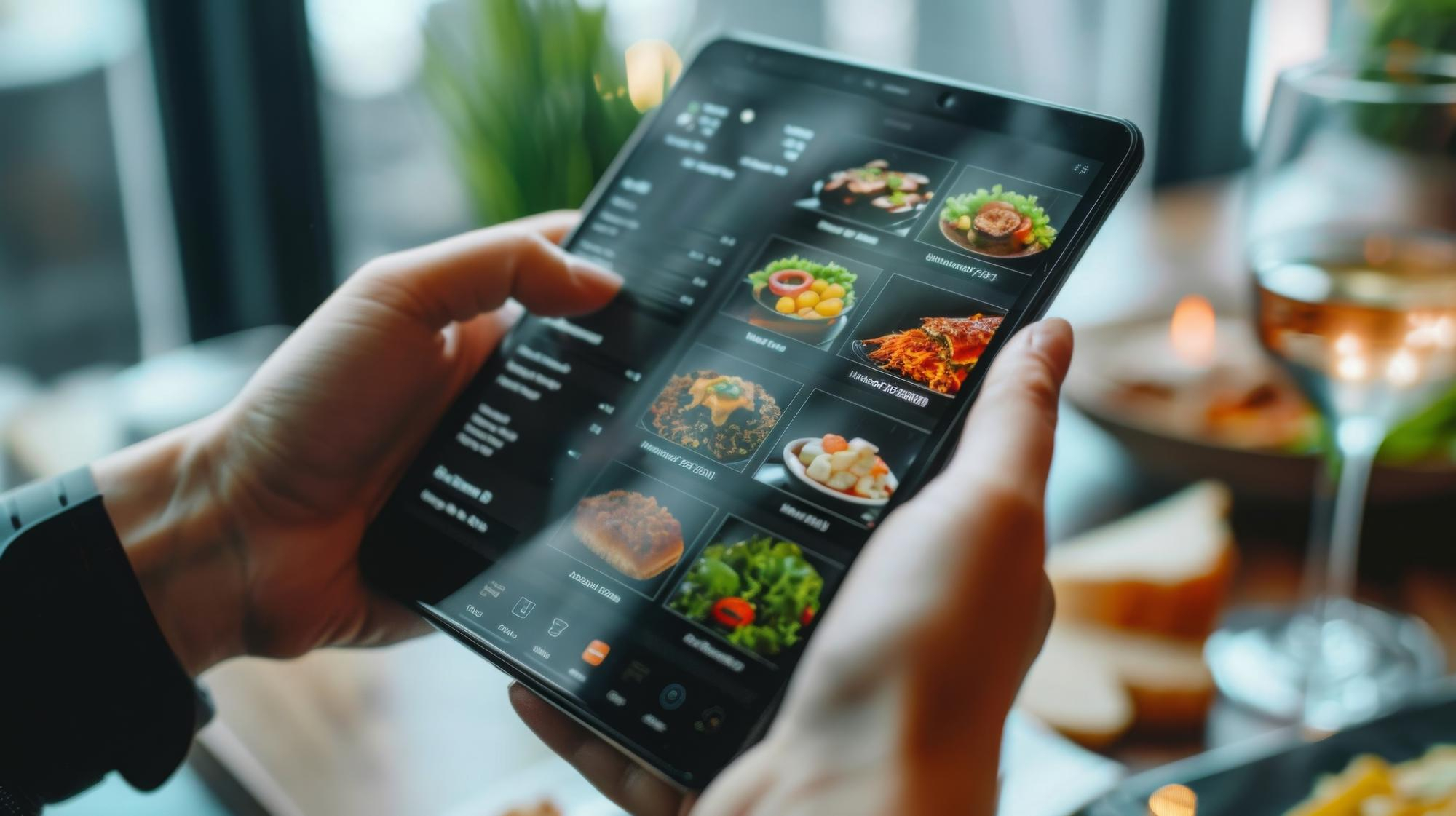
Digital Menu vs Paper Menu: Setting the Scene for UAE Restaurants
It’s a Thursday evening in Dubai, and two very different ordering experiences are unfolding just a few tables apart. A four-top has just been seated, drinks are ordered, and across the room a server pulls up a laminated menu that’s seen one too many spills. Two tables over, a couple scans a small black-and-white code taped to the edge of their table, and within seconds they’re scrolling through photos of the evening’s specials on their own phone. Neither table notices the other’s experience, but the restaurant certainly does, because behind the scenes, one of those two systems is quietly shaping costs, service speed, and guest satisfaction in very different ways.
This is the decision facing restaurant owners across the UAE today: stick with the printed menu that has anchored hospitality for generations, or move toward the screen-based, scannable alternative that’s become increasingly common on tables from Dubai to Sharjah. The digital menu vs paper menu debate isn’t really about which technology looks more modern. It’s about which format actually serves a restaurant’s guests, staff, and bottom line better.
There’s no single right answer that applies to every concept, and that’s precisely why this comparison deserves a closer look. A beachside café chasing fast turnover has very different priorities than a heritage-style Emirati restaurant built around ritual and atmosphere. This guide breaks down what each menu format actually offers, how the UAE’s dining culture shapes the decision, and what factors should guide the choice for different types of food and beverage businesses.
What makes this comparison worth sitting with, rather than settling on a quick gut call, is how many different parts of a restaurant it actually touches. A menu format decision quietly influences printing budgets, table turnover, how guests perceive a brand within the first thirty seconds of sitting down, and even how much useful data a restaurant collects about its own bestsellers. Very few operational choices carry that much weight while looking, on the surface, like such a small detail.
What Is a Digital Menu, and What Is a Paper Menu?
Before comparing the two, it helps to be clear on what each format actually involves, since “digital menu” covers more ground than most people assume.
Understanding the Digital Menu
digital menu is any restaurant menu that guests access electronically rather than on a printed page. In the UAE, this most often means a QR code placed on the table, on a stand, or printed at the counter. Guests scan it with their phone camera, and a web-based menu opens instantly, with no app download required. Some restaurants take this further with tablets built into the table itself, or a dedicated ordering app tied to a loyalty program.
The shift toward this format didn’t happen overnight. How digital QR adoption evolved across the UAE’s F&B industry traces back to a mix of pandemic-driven necessity and a genuinely tech-comfortable population that was already scanning codes for parking, payments, and government services long before menus followed suit.
Setting one up is fairly straightforward. Most platforms handle generating a QR code for a restaurant menu within minutes, linking it to a menu page that can be edited at any time without touching a printer.
Understanding the Traditional Paper Menu
The paper menu needs less introduction. It’s printed, physical, and handed to guests or already placed on the table before they sit down. Its format hasn’t changed much in decades; a folded card, a laminated sheet, a leather-bound booklet, but its role in shaping first impressions and setting a restaurant’s tone has stayed remarkably consistent.
It’s also worth noting that neither format is entirely fixed. Some restaurants blur the line by placing a printed menu on a tablet, essentially a digital menu displayed on hardware rather than a personal phone, or by laminating a paper menu with a QR code discreetly printed in the corner. These middle-ground setups are common enough across the UAE that the digital-versus-paper conversation is often less binary in practice than it sounds on paper.
- Access method:
Digital menus are opened via a scanned code or a tap, while paper menus are physically handed over or already waiting on the table. - Update process:
Digital menus can be edited instantly from a back-end dashboard, while paper menus require a new print run for every change. - Guest interaction:
Digital menus are usually browsed individually on a personal device, while paper menus are typically shared or passed between guests at a table.
Why This Decision Matters for UAE Restaurant Owners?
The UAE’s dining audience makes this choice more consequential than it might be elsewhere, for a few clear reasons.
The UAE isn’t a typical restaurant market. High smartphone penetration, a population accustomed to contactless technology, and one of the most linguistically diverse dining audiences in the world all shape how guests expect to interact with a menu. A resident in Dubai might scan a QR code without a second thought, a first-time visitor from Europe might appreciate the same convenience, and an older guest might simply prefer something to hold.
The city’s visually driven dining culture adds another layer. Dubai’s Instagram-worthy dining scene reflects just how much presentation matters to UAE diners, and a well-designed menu, whether printed or digital, plays directly into that expectation.
Tourism adds further weight to the digital menu vs paper menu UAE decision. Dubai alone welcomes well over sixteen million visitors a year, many of whom already expect the same contactless convenience they’re used to back home. Multilingual needs are common too. A digital menu can switch between English, Arabic, and several other languages with a single tap, something a printed menu can only manage by stocking multiple physical versions.
None of this means digital automatically wins. It simply means the decision carries more weight in a market this diverse, and it’s worth making deliberately rather than by default.
Consider how differently a family-run Emirati kitchen in Sharjah and a rooftop lounge in Dubai Marina experience the same choice. One is often serving multi-generational families where an elderly grandparent and a teenager are ordering from the same table; the other is serving a younger, highly mobile crowd who may have already looked at the menu online before even arriving. Both are technically UAE restaurants making a digital menu vs paper menu decision, yet the right answer for each could easily point in opposite directions.
The Case for Digital Menus
For many UAE restaurants, the appeal of a digital menu comes down to five practical advantages that show up in daily operations.
Lower Long-Term Costs and Instant Updates
Printing costs add up quickly for any restaurant that changes its offering regularly, whether that means seasonal dishes, price adjustments, or an ingredient that’s suddenly out of stock. Each of those changes means a reprint with a paper menu. A digital menu removes that friction almost entirely. An item can be marked unavailable, a price corrected, or a new dish added within minutes, all without a single page reprinted.
This matters more than it might first appear. A restaurant that runs seasonal specials, adjusts pricing during Ramadan, or reacts to a supplier shortage might otherwise be reprinting menus every few weeks. Over a full year, those small, repeated costs, along with the design fees and the staff hours spent coordinating each print run, often outweigh the upfront setup cost of a digital system.
Hygiene and Contactless Convenience
Hygiene has stayed on guests’ minds longer than many expected since the pandemic. A shared paper menu, handled by dozens of guests a day, is still a lingering concern for some diners. A contactless menu sidesteps this entirely, since each guest browses on their own device rather than a shared one.
Restaurants that once relied on laminating and wiping down menus between seatings often find that a QR code removes an entire small task from the daily cleaning routine, which, while minor on its own, is one less thing for a busy front-of-house team to manage during service.
Faster Service and Table Turnover
With a paper menu, guests typically wait for a server to bring it before they can even begin deciding. With a scannable menu, browsing starts the moment they sit down, so by the time a server arrives, many guests are already close to ordering. For high-volume restaurants, that shaved-off time adds up meaningfully across a full night of service.
This is particularly noticeable in cafes and casual dining spots during peak lunch or weekend brunch hours, when every extra minute a table sits without ordering directly limits how many guests can be served that day. A faster ordering cycle doesn’t just make guests happier; it can meaningfully improve revenue per table across a busy shift.
Upselling and Data Insights
A digital menu isn’t just a passive list. It can suggest a side dish, highlight a dessert pairing, or flag a limited-time offer at the exact moment a guest is deciding. Over time, the ordering data this generates becomes genuinely useful, since it shows which dishes perform well and which barely get a second look. Restaurants that use this properly can even lean on it for turning order data into repeat-customer marketing, rather than guessing at what guests want to see again.
Sustainability Angle
Reducing paper waste is a smaller-sounding benefit on its own, but it fits into a much larger shift already underway. The UAE hospitality sector’s broader move toward paperless operations shows this isn’t an isolated menu decision so much as part of a wider operational direction many restaurants and hotels are already heading in.
- Cost efficiency:
No reprinting costs when prices, dishes, or availability change. - Faster ordering:
Guests can browse and decide before a server even arrives at the table. - Built-in data:
Order patterns reveal what’s actually selling, not just what’s assumed to sell.
The Case for Paper Menus
Paper menus haven’t disappeared for a reason. They still offer a few things digital formats genuinely struggle to replicate.
Tactile Branding and Ambience
For certain concepts, the weight of the paper, the texture of the cover, or the way a menu is designed to match a restaurant’s theme is part of the experience itself, something a screen simply can’t recreate in the same way. This is where professional menu design genuinely earns its cost, since a well-crafted physical menu becomes part of a restaurant’s visual identity the moment it lands on the table.
No Dependency on Technology or Connectivity
A paper menu doesn’t care about Wi-Fi strength, a dead phone battery, or a guest who simply isn’t comfortable navigating a screen. It works exactly the same way every single time, which is a kind of reliability digital formats can’t fully guarantee.
This becomes especially relevant during a busy service when the restaurant’s own network is under strain, or for outdoor venues where signal can be inconsistent. A printed menu simply doesn’t have a failure mode in the way a digital one occasionally does.
Comfort for Certain Guest Demographics
Not every guest wants to scan a code before ordering dinner. Older diners, guests unfamiliar with the technology, or simply people who prefer to unplug during a meal often find a physical menu more comfortable, and dismissing that preference risks alienating a real segment of any restaurant’s audience.
There’s also a subtler point here: for some guests, a meal out is partly about stepping away from a screen rather than reaching for one the moment they sit down. A paper menu quietly supports that, even if it’s rarely the reason a restaurant chooses to keep it.
- Tangible experience:
A well-designed paper menu contributes directly to a restaurant’s atmosphere. - Zero tech dependency:
No app, signal, or battery life required before a guest can order. - Broader comfort:
Some guests simply prefer a familiar, physical format over a screen.
Digital Menu vs Paper Menu: A Side-by-Side Comparison
Laid out side by side, the practical differences between the two formats become much easier to weigh.
None of these factors carries equal weight for every restaurant. A fine-dining venue might value branding and ambience far more than update speed, while a busy café might care almost exclusively about service speed and cost. Treating this as a checklist to score against a restaurant’s own priorities, rather than a list where digital simply wins on points, tends to produce a far more useful answer.
- Cost over time:
Paper menus are cheaper upfront but expensive to maintain with frequent reprints; digital menus, especially through a dedicated digital menu platform, cost more initially but stay virtually free to update afterward. - Update speed:
A digital menu reflects a price or availability change within minutes; a paper menu requires a new print run. - Guest experience:
Digital menus support photos, videos, and multiple languages in one place; paper menus rely on a fixed layout and printed translations. - Hygiene:
Digital menus avoid shared touchpoints entirely; paper menus need regular cleaning or replacement to stay hygienic. - Branding and ambience:
Paper menus contribute physically to a restaurant’s atmosphere; digital menus offer a different kind of branding through visuals and interactivity. - Service speed:
Digital menus let guests start browsing immediately; paper menus depend on a server’s availability. - Sustainability:
Digital menus produce far less ongoing paper waste; paper menus generate consistent waste with every reprint cycle.
Which Restaurants Should Choose Digital, Paper, or Both?
The right choice depends less on personal preference and more on what kind of restaurant is making the decision.
Quick-Service Restaurants and Cafes
Speed matters most here, and a QR code menu tends to be the clear fit: faster ordering, lower staffing pressure during peak hours, and less friction for guests who just want to order and move on.
Fine Dining and Heritage Concepts
For restaurants built around ritual, storytelling, or a strong sense of place, heritage-driven concepts built around traditional Emirati cuisine are a good example, a well-designed paper menu often supports the experience better than a screen ever could, even if a digital wine list or specials card runs alongside it.
Casual Dining and Family Restaurants
This is where the decision gets genuinely mixed, and often where a hybrid setup earns its keep. Family restaurants tend to serve a wide age range at a single table, from young children choosing from a picture-led kids’ menu to grandparents who would rather glance at a printed page. A digital menu can still add value here, particularly for browsing photos of larger sharing platters, but pairing it with a light printed version often serves the whole table better than committing fully to one format.
Cloud Kitchens and Delivery-Focused Brands
For brands with no dine-in floor at all, this comparison barely applies. The menu already exists almost entirely online, which makes digital the only realistic format from the outset.
Tourist-Heavy Locations
Areas that see heavy tourist footfall carry their own considerations. Venues among the popular dining destinations in Abu Dhabi often benefit from multilingual digital menus that remove language barriers instantly.
The same logic applies to Dubai’s most-visited seafood restaurants, where a diverse, high-turnover guest base makes fast, flexible menu access genuinely useful rather than just convenient.
The Hybrid Approach
Many UAE restaurants have quietly settled on a middle ground: a physical menu for the initial browsing experience, paired with a QR code for specials, allergen details, or a wine list. This isn’t really a compromise so much as a recognition that different guests want different things, and offering both removes the pressure of picking one format for everyone.
The best menu format is rarely the trendiest one. It’s the one guests don’t have to think about.
Practical Tips for UAE Restaurant Owners Making the Switch
Whichever direction a restaurant leans, a few practical steps make the transition, or the decision to stay traditional, considerably smoother.
- Know the guest base first:
A concept serving mostly tourists and younger residents will likely lean digital more comfortably than one serving a loyal, older regular crowd. - Budget realistically:
New restaurant owners working with limited capital should weigh menu format costs against everything else on the opening budget; resources on starting a food business on a limited budget are worth reviewing before committing either way. - Anticipate rollout friction:
Switching formats isn’t always seamless, and being aware of common digital marketing challenges UAE food businesses face early can prevent avoidable setbacks during the transition. - Train staff properly:
Whether it’s explaining a QR code to a hesitant guest or keeping paper menus clean and current, staff need clear guidance either way. - Use the marketing angle:
A digital menu opens a genuine marketing channel; generating leads through WhatsApp marketing is one way UAE food businesses are already turning menu interactions into ongoing customer relationships. - Test before fully committing:
A short trial period, even in one section of the restaurant, reveals more about guest reaction than any amount of planning in advance. - Keep a fallback option ready:
Even restaurants that switch fully to digital often keep a handful of printed menus on hand for guests who ask, or for moments when the network drops during service. - Review the decision periodically:
Guest expectations, technology costs, and even a restaurant’s own concept can shift over a year or two, so it’s worth revisiting this choice rather than treating it as permanent.
Making the Right Choice for Your Restaurant
There’s no universal winner in this comparison, and that’s the most honest answer to give.
A quick-service café in Dubai Marina and a heritage restaurant in Al Ain are solving completely different problems, even though both are technically choosing a menu format. What matters more than picking a side is being deliberate about it: understanding the guest base, weighing real costs against real benefits, and staying open to combining both formats where it makes sense rather than forcing an all-or-nothing decision.
It’s also worth remembering that this isn’t a one-time decision carved in stone. A restaurant that launches with a paper-only menu can always test a QR code for its dessert or wine list once it sees how guests respond. Equally, a restaurant that goes fully digital on opening day can always print a short physical menu if enough guests ask for one. The goal isn’t to get the decision perfectly right on the first attempt; it’s to stay responsive to how real guests actually behave once the doors are open.
- Guest demographics:
should shape the decision more than personal preference. - Cost:
looks different in the short term versus the long term for each format. - Hybrid setups:
are increasingly common and often the most practical path forward.
A restaurant rarely needs to pick a side in the digital menu vs paper menu debate. It needs to choose what actually works for the guests sitting at its tables.
