

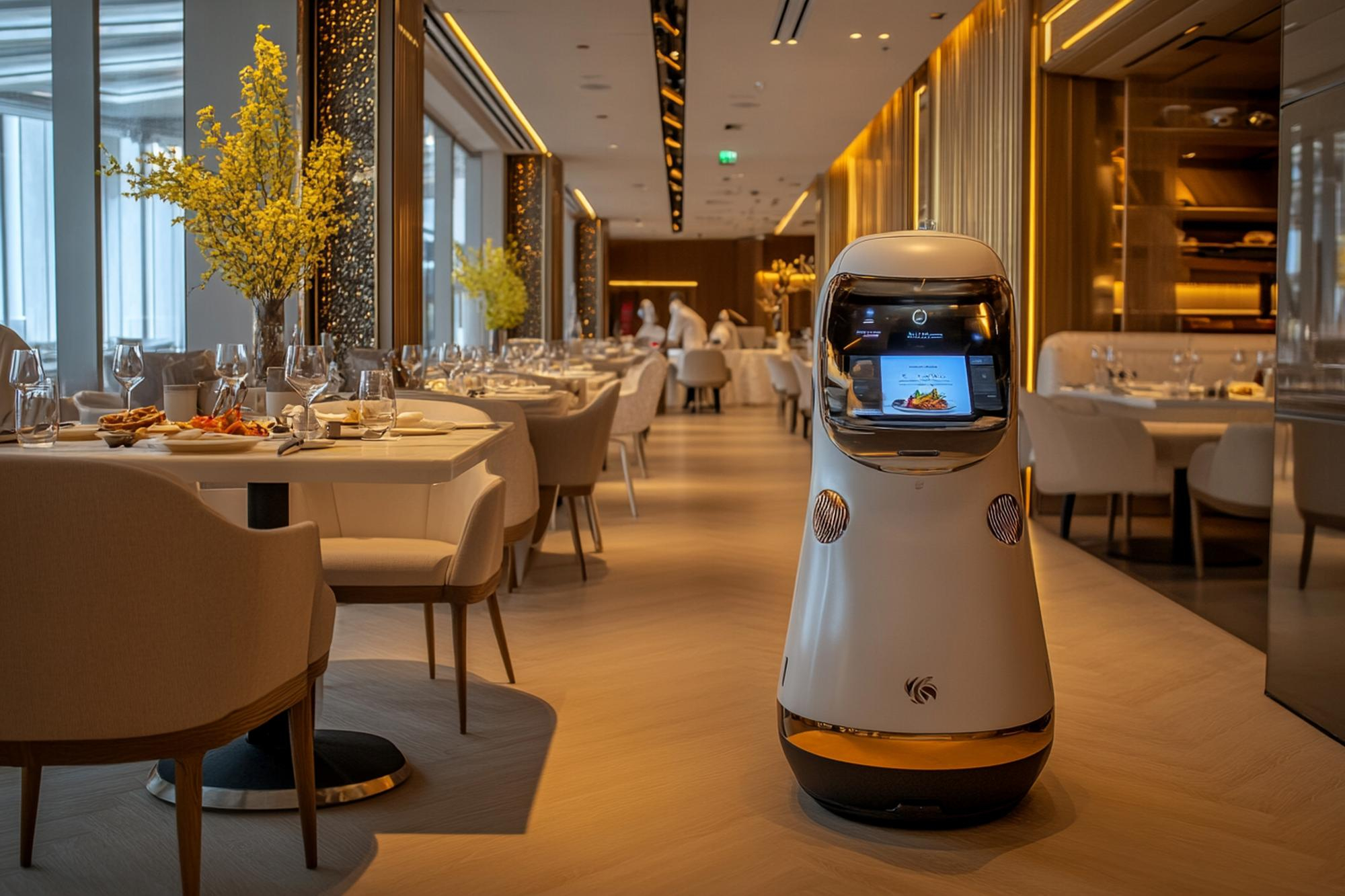
The Rise of AI-Powered Restaurants in the UAE: Your Guide to AI-Smart Dining
From the skyline crowned by the Burj Khalifa to paperless government services and driverless metros, the UAE is a place where tomorrow shows up early—and now it’s pulling up a chair at your table. Artificial Intelligence (AI) is starting to shape everyday dining in ways you can actually feel: shorter waits, fewer sold‑out dishes, smoother service, and experiences that quietly adapt to you. Think less sci‑fi robot and more helpful digital teammate in the background, coordinating the kitchen, guiding the floor, and making the whole night out feel more effortless.
If QR code menus were the first big step toward digital dining, AI is the leap that gives restaurants real “smarts.” Instead of just showing information, systems now learn and respond. They forecast busy periods and prep accordingly, so the kitchen isn’t overwhelmed. They help chefs keep quality consistent—flagging an overcooked steak or a missing garnish—and they reduce waste by ordering ingredients closer to real demand. On the guest side, AI remembers the basics you care about (vegetarian, gluten‑free, still water, no coriander), spotlights dishes you’ll likely love, and keeps the ordering process simple whether you tap a screen or speak your order.
So what does that mean for you, the diner in the UAE? Choosing a place gets easier when menus are clearer and more relevant, service feels faster because the back‑of‑house is better prepared, and paying becomes as simple as a tap or a word. You should also expect more transparency about how your preferences are used and better control over what you share. In the pages ahead, we’ll break down how this tech actually works, where it helps most (and where it shouldn’t replace people), and how restaurants can balance high‑tech efficiency with genuine hospitality. In short: welcome to the next chapter of eating out—warmer, quicker, and a little smarter with every visit.
What Exactly Is an AI-Powered Restaurant?
Let’s clear up what an “AI-powered restaurant” really means. It isn’t about sci‑fi robots running the show—it’s about smart software helping people do their jobs better. Think of AI as a quiet, hard‑working helper that keeps service moving, reduces mistakes, and makes your visit feel smooth from start to finish.
Behind the scenes, AI acts like the restaurant’s “brain.” It looks at what’s happening—orders, timing, stock levels, even busy hours—and uses that information to make smarter decisions. The result is simple: happier teams, faster service, and a dining experience that feels more personal for every guest.
At its core, the AI-powered restaurant is a data-driven enterprise. It leverages several key technologies to gather, analyze, and act upon information in ways that were previously impossible. To understand how this works, let’s break down the main components of this technological brain:
- Predictive Analytics: This is the crystal ball of the restaurant world. By analyzing historical sales data, weather patterns, local events, and even social media trends, AI-powered predictive analytics can forecast customer demand with remarkable accuracy. For the restaurant, this means knowing how much food to order, how many staff members to schedule, and which dishes are likely to be popular on any given day. For the diner, it means a lower chance of your favorite dish being sold out and a more smoothly run service, even on the busiest nights.
- Machine Learning (ML): This is where the “personalization” magic happens. Machine learning algorithms are designed to learn from data without being explicitly programmed. In a restaurant context, this means the system learns your individual preferences over time. It remembers that you prefer still water over sparkling, that you have a gluten allergy, or that you have a weakness for chocolate desserts. This allows the restaurant to move beyond a one-size-fits-all approach and create a dining experience that feels like it was designed just for you.
- Natural Language Processing (NLP): NLP is the technology that allows computers to understand and respond to human language. This is the driving force behind the conversational AI systems that are beginning to appear in restaurants. Whether you are talking to a voice-activated ordering system at a drive-thru or typing a question into a chatbot on the restaurant’s website, it is NLP that allows the system to understand your request and provide a helpful response. This technology is making the process of ordering food more natural and intuitive than ever before.
- Computer Vision: This is the “eyes” of the AI system. By using cameras and sophisticated image recognition software, computer vision can monitor various aspects of the restaurant’s operations. It can be used to ensure that every dish that leaves the kitchen meets the restaurant’s high standards of quality and presentation. It can also be used to monitor customer flow and staff efficiency, helping the restaurant to identify and address potential bottlenecks in the service.
Together, these technologies form a powerful and interconnected system that is capable of optimizing every aspect of the restaurant’s operations, from the back of the house to the front.
The AI Revolution Behind the Scenes: A Smarter, More Sustainable Kitchen
While diners will experience the benefits of AI most directly in the form of personalized service and a smoother ordering process, some of the most profound changes are happening in a place that most customers never see: the kitchen. The traditional restaurant kitchen is a high-pressure environment where timing, precision, and consistency are paramount. It’s also a place where AI can bring major improvements.
The Rise of the AI Chef: Precision, Consistency, and Creativity
The idea of an “AI chef” may sound like a gimmick, but the reality is that AI is already playing a significant role in the modern kitchen. While we are still a long way from a robot that can replicate the creative genius of a Michelin-starred chef, AI is proving to be an invaluable tool for enhancing the skills of human chefs and ensuring a level of consistency that is difficult to achieve through manual processes alone.
In some of the world’s most advanced kitchens, robotic arms are already being used to perform repetitive tasks, such as flipping burgers, frying noodles, or even mixing cocktails. These robots can perform these tasks with a level of precision and consistency that is simply impossible for a human to match, ensuring that every dish is cooked to perfection every single time. But the role of the AI chef goes far beyond simple automation.
By analyzing vast datasets of recipes, flavor pairings, and customer feedback, AI can also be a powerful tool for culinary creativity. It can identify unexpected flavor combinations and suggest new dishes that a human chef might never have considered. This partnership between human creativity and artificial intelligence is pushing the boundaries of gastronomy and leading to the creation of entirely new and exciting culinary experiences.
Intelligent Inventory and a Greener Footprint
One of the biggest challenges facing the restaurant industry is food waste. According to the UN Environment Programme, food service accounts for a significant portion of the food that is wasted globally. This is not only a major environmental problem, but also a significant financial drain on restaurants. AI-powered inventory management systems are tackling this problem head-on.
By using predictive analytics to forecast demand with a high degree of accuracy, these systems can ensure that restaurants order only the ingredients they need, when they need them. This just-in-time approach to inventory management can dramatically reduce the amount of food that spoils and has to be thrown away. This is not only good for the planet, but also for the restaurant’s bottom line. By reducing food waste, restaurants can significantly improve their profit margins, a crucial advantage in the highly competitive UAE market.
Ensuring Perfection: AI-Powered Quality Control
Consistency is the hallmark of a great restaurant. Diners expect their favorite dish to taste the same every time they order it. However, maintaining this level of consistency in a busy kitchen can be a major challenge. This is where computer vision comes in.
By placing cameras at key points in the kitchen, restaurants can use AI-powered computer vision systems to monitor the preparation of every dish. These systems can be trained to recognize what a perfectly prepared dish looks like, and to flag any deviations from the standard. For example, the system could alert the chef if a pizza is not perfectly round, if a steak is overcooked, or if a dish is missing a garnish. This provides an extra layer of quality control, ensuring that every dish that leaves the kitchen is a perfect representation of the restaurant’s brand.
How AI Will Transform Your Dining Experience?
While the behind-the-scenes improvements in the kitchen are fundamental to the rise of the AI-powered restaurant, the most exciting and noticeable changes for diners will be in the dining room itself. The application of AI to the customer-facing aspects of the restaurant is set to create a dining experience that is more personal, convenient, and engaging than ever before. This is where the data-driven intelligence of the AI brain translates into tangible benefits that you will be able to see and feel.
The Era of Hyper-Personalization: A Menu Made for You
For years, personalization in restaurants has been limited to the server remembering your name or your usual drink order. AI takes this concept to a whole new level, ushering in an era of “hyper-personalization.” By learning your individual tastes and preferences, AI can create a dining experience that feels as if it has been curated specifically for you.
Imagine sitting down at a restaurant and scanning a QR code, just as you do now. But instead of seeing a static, one-size-fits-all menu, you are presented with a dynamic menu that has been tailored to your personal preferences. The dishes you have ordered and enjoyed in the past are prominently displayed at the top. The menu might highlight new items that it predicts you will love, based on your previous choices. If you have a dietary restriction, such as a gluten allergy or a preference for vegetarian food, the menu will automatically filter out any unsuitable dishes, so you don’t have to check the ingredients for every dish.
This is the power of hyper-personalization. It is about creating a dining experience that is not just convenient, but also thoughtful and considerate of your individual needs and desires.
Ordering and Paying with Conversational AI: Just Say the Word
The process of ordering and paying is another area that is being transformed by AI. While QR code menus have already streamlined this process, conversational AI is set to make it even more natural and intuitive. Powered by Natural Language Processing (NLP), these systems allow you to interact with the restaurant’s ordering system using your own voice, just as you would with a human server.
We are already seeing the first wave of this technology in the drive-thrus of major fast-food chains in the UAE, where AI-powered voice assistants are taking orders with surprising accuracy. This technology is now moving into the dining room. Imagine being able to place your order simply by speaking to a small device on your table, or even to your own smartphone. You could say, “I’ll have the steak, medium-rare, with a side of fries,” and the order would be instantly transmitted to the kitchen. This not only speeds up the ordering process, but also reduces the chances of human error.
The digital platforms that power these interactions, such as the customizable menu solutions offered by platforms like QRHUB, serve as the crucial foundation for this technology. They provide the structured data and the user interface that allow the AI to understand the menu and process the customer’s request. This seamless integration of a user-friendly digital menu with a powerful conversational AI is the key to creating a truly effortless ordering experience.
Dynamic Menus and Pricing: A More Responsive Restaurant
AI also allows for a more dynamic and responsive approach to menu management and pricing. Instead of a static menu that is printed once and then used for months, AI-powered restaurants can have menus that change in real-time, based on a variety of factors.
For example, the menu could automatically update to reflect the availability of fresh, seasonal ingredients. If the chef gets a delivery of fresh fish from the market, it could be added to the menu instantly, complete with a beautiful photo and a detailed description. The menu could also change based on the time of day, with a different selection of dishes offered for lunch and dinner.
AI can also enable dynamic pricing, a strategy that has long been used by the airline and hotel industries. This would allow restaurants to offer lower prices during off-peak hours, helping to attract more customers and to manage customer flow more effectively. For the diner, this could mean the opportunity to enjoy a delicious meal at a lower price, simply by choosing to dine at a less busy time.
The Human Touch in a High-Tech World: What Diners Need to Know?
The prospect of a high-tech, AI-powered dining experience is undoubtedly exciting, but it also raises some important questions. What happens to the human element of hospitality in a world of automation and algorithms? And what about our personal data? These are valid concerns, and the best AI-powered restaurants will be those that address them head-on, with transparency and a genuine commitment to their customers’ well-being.
The Evolving Role of Restaurant Staff: From Order-Taker to Experience Manager
The fear that AI will lead to widespread job losses in the restaurant industry is understandable, but it is also largely misplaced. While it is true that AI will automate many of the repetitive and mundane tasks that are currently performed by human staff, such as taking orders and processing payments, this will not make humans obsolete. Instead, it will free them up to focus on the things that humans do best: creativity, empathy, and genuine human connection.
In the AI-powered restaurant, the role of the server will evolve from that of a simple order-taker to that of a “culinary guide” or an “experience manager.” With the administrative tasks taken care of by the AI, the server will have more time to interact with guests, to share stories about the food and the wine, to make personalized recommendations, and to ensure that every guest feels welcomed and cared for. They will be the human face of the brand, the storytellers and the problem-solvers who create the memorable moments that technology alone cannot replicate.
The future of hospitality is not about choosing between technology and the human touch; it is about finding the perfect balance between the two.
Your Data, Your Dinner: Navigating Privacy and Trust in the Digital Age
In order for an AI-powered restaurant to provide a personalized experience, it needs to collect data about its customers. This data can include everything from your ordering history and dietary preferences to your birthday and your favorite table. While this data is used to enhance your dining experience, it is natural to have questions about how it is being collected, stored, and used. In the digital age, data privacy is a major concern, and restaurants have a responsibility to be transparent and trustworthy in their handling of customer data.
The best AI-powered restaurants will be those that are upfront and honest about their data policies. They will clearly explain what data they are collecting and why, and they will give customers control over their own information. They will allow customers to view, edit, and even delete their data, and they will provide clear and simple ways to opt out of data collection altogether. For the diner, it is important to be aware of the data you are sharing and to make informed choices about which restaurants you trust with your information. Just as you would read the nutritional information on a food label, it is a good idea to read a restaurant’s privacy policy before you agree to share your data.
The Art of AI: How Brands Are Telling Their Tech Story?
For restaurants, adopting AI technology is only half the battle. The other half is convincing customers that this technology will actually make their dining experience better. This is a significant marketing challenge. How do you make AI feel warm, welcoming, and beneficial, rather than cold, impersonal, and intrusive? This is where the art of branding and storytelling comes in.
The best branding and creative agency can be an invaluable partner in this process. They specialize in helping brands to craft a compelling narrative around their products and services. In the case of an AI-powered restaurant, this means focusing on the benefits of the technology, rather than the technology itself. It means telling a story about how AI is helping the restaurant to create more delicious food, to provide better service, and to create a more enjoyable and memorable experience for its guests. It is about using beautiful design and engaging content to make the technology feel like a natural and seamless part of the dining experience, rather than a jarring and unwelcome intrusion.
By working with a creative partner who understands the nuances of the local market, restaurants can ensure that their investment in AI technology pays off, not just in terms of operational efficiency, but also in terms of customer loyalty and brand love.
Welcome to the Smart Future of Dining
The rise of AI-powered restaurants in the UAE is not a fleeting trend; it is the beginning of a new and exciting chapter in the story of food. This technological revolution is about more than just robots and algorithms; it is about a fundamental rethinking of the way we cook, serve, and experience food. For diners, this means a future where every meal is more personal, more convenient, and more delightful. It is a future where our favorite restaurants know us better than ever before, and where the food we eat is not only delicious, but also more sustainable and ethically produced.
As we have seen, the best AI-powered restaurants will be those that strike a delicate balance between the efficiency of technology and the warmth of the human touch. They will be the ones that use AI not to replace their staff, but to empower them. They will be the ones that are transparent and trustworthy in their use of customer data. And they will be the ones that tell a compelling story about how they are using technology to create a better world, one delicious meal at a time. So, the next time you see a restaurant advertising itself as “AI-powered,” don’t be intimidated. Be curious. Be open-minded. And be prepared to taste the future.
