

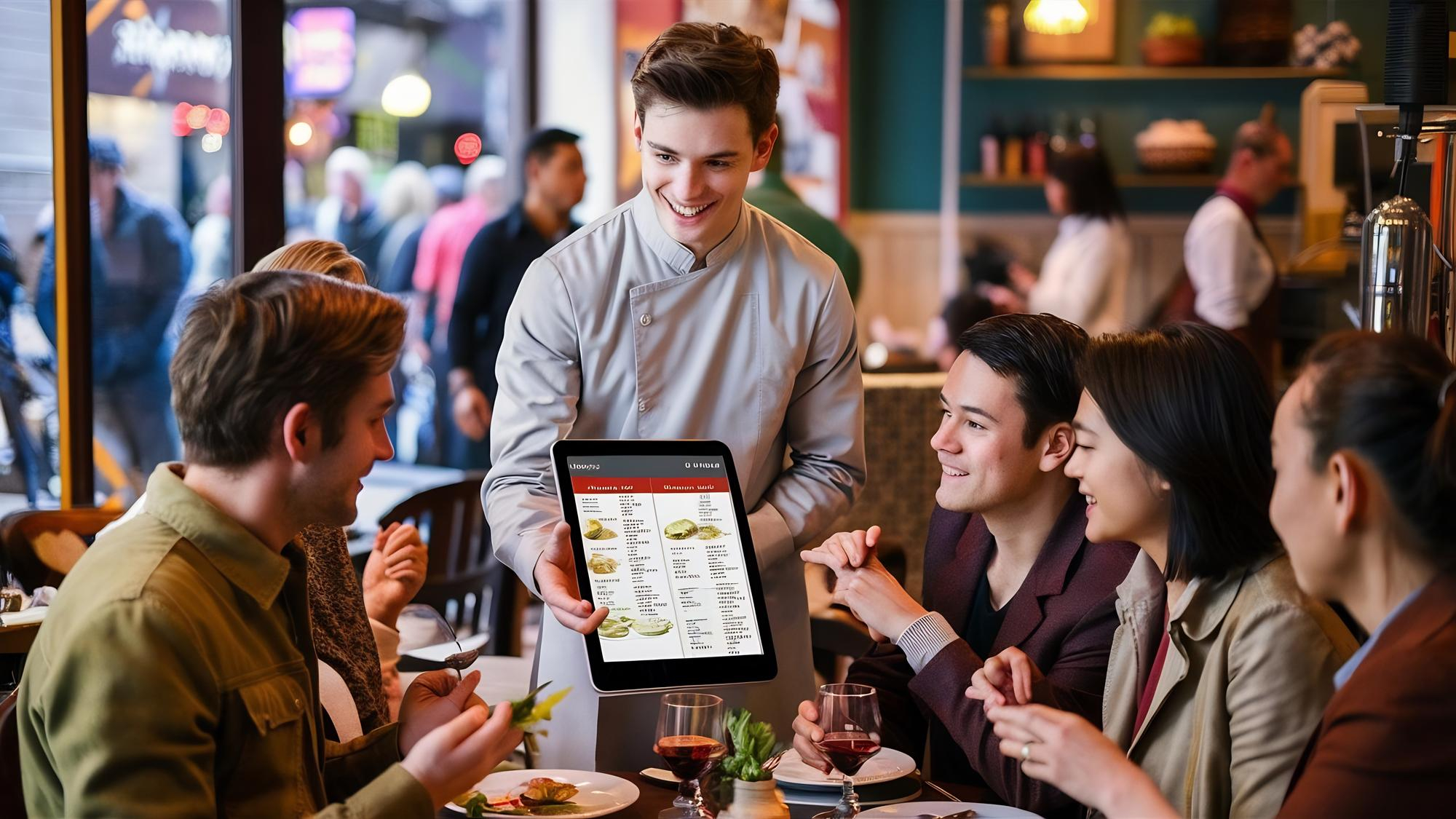
Turning Tables into Revenue: Dynamic Pricing Strategies for the UAE Restaurants
Ever noticed how your Uber ride costs more during rush hour? Or how that hotel room you’ve been eyeing suddenly jumps in price when everyone’s trying to book for the weekend? That’s dynamic pricing in action, and guess what? It’s making its way into the restaurant world, right here in the UAE.
If you’re a restaurant owner in Dubai, Abu Dhabi, or anywhere else in the Emirates, you’re probably feeling the squeeze. Ingredient costs are up, rent keeps climbing, and finding good staff is harder (and more expensive) than ever. Meanwhile, you’ve got empty tables during lunch and a line out the door on Friday night. Sound familiar?
Here’s the thing: dynamic pricing for the UAE restaurants isn’t about being greedy or squeezing every dirham out of your customers. It’s about being smart with your pricing so you can keep your doors open, your staff paid, and your customers happy. It’s about filling those empty tables at 3 PM and making the most of your packed Saturday night crowd.
In this guide, we’re going to break down everything you need to know about dynamic pricing strategies for restaurants. No complicated jargon, no confusing theories—just practical advice you can actually use. Whether you’re running a cozy café in JBR or a fine dining spot in Downtown Dubai, there’s something here for you. Let’s dive in.
What Exactly is Dynamic Pricing? (And Why Should You Care?)
Breaking Down the Basics
Okay, let’s start simple. Dynamic pricing is just a fancy way of saying your prices can change based on what’s happening around you. Instead of printing a menu with fixed prices that stay the same for months, you adjust your prices based on things like how busy you are, what time of day it is, or even what day of the week it is.
Think of it like this: you wouldn’t charge the same price for a beach umbrella in December as you would in July, right? Same principle. When demand is high, prices can go up a bit. When things are slow, you can lower prices to attract more customers.
And here’s what a lot of people get wrong: dynamic pricing isn’t just about raising prices. Sometimes it’s about lowering them strategically to fill empty seats. That Tuesday afternoon when you’ve got three tables occupied? Drop your prices a bit, get some customers in, and suddenly you’re making money instead of paying staff to stand around.
Why the UAE Restaurants Are Jumping on Board?
Let’s be real for a second. Running a restaurant in the UAE is tough. You’re competing with thousands of other spots, all fighting for the same customers. Your rent is probably astronomical (thanks, Dubai). Your ingredients cost more than they did last year. And don’t even get me started on labor costs.
Traditional pricing just doesn’t cut it anymore. If you keep your prices too low, you can’t cover your costs during expensive peak times. If you keep them too high, nobody shows up during slow periods. You need flexibility, and that’s exactly what dynamic pricing gives you.
Plus, technology has made this so much easier. Remember when changing your menu meant reprinting everything? Now, with digital menu boards and QR code menus, you can update prices in seconds. Your customers are already used to seeing prices change on delivery apps, so the concept isn’t as foreign as it used to be.
The Four Types of Dynamic Pricing (Explained Simply)
Surge Pricing – When Demand Spikes
You know how Uber charges more when everyone’s trying to get a ride home after a concert? That’s surge pricing. In restaurants, it works the same way. When everyone wants to eat at the same time, prices go up.
Let’s say you run a popular brunch spot in Dubai. Every Friday and Saturday, you’re fully booked weeks in advance. People are literally fighting for reservations. That’s the perfect time for surge pricing. You could charge a premium for those prime weekend slots because, honestly, people are willing to pay for them.
Same thing goes for special occasions. Valentine’s Day? New Year’s Eve? Your prices can reflect the fact that demand is through the roof. Food delivery apps in the UAE already do this during rain or peak dinner hours, and customers have learned to accept it.
The key is being smart about it. You don’t want to gouge people, but you do want to capture the value of your most in-demand times.
Time-Based Pricing – The Happy Hour Hero
This is probably the easiest type of dynamic pricing to implement, and it’s something customers already understand. Lower prices during quiet hours, regular (or slightly higher) prices during busy times. Simple.
Happy hour is the classic example. That dead zone between lunch and dinner? Offer discounted drinks and appetizers. Suddenly, you’ve got customers coming in when you’d otherwise be empty. They’re spending money, your staff is busy, and you’re building customer loyalty.
But it doesn’t have to stop at happy hour. What about an early bird special for dinner? Come in before 6 PM and get 15% off. Or a late-night menu with reduced prices after 10 PM to clear out inventory and attract the after-party crowd.
The beauty of time-based pricing is that it creates new revenue streams from times that would otherwise be dead. Every customer you bring in during off-peak hours is basically pure profit because your fixed costs (rent, staff, utilities) are already covered.
Demand Pricing – Following the Patterns
Demand pricing is like time-based pricing’s smarter cousin. Instead of just looking at the clock, you’re looking at patterns over days, weeks, or even seasons.
Maybe you’ve noticed that Mondays are always slow, but Thursdays are picking up. You could offer a “Monday Madness” deal with reduced prices to get people in the door. Meanwhile, Thursday prices stay normal (or even go up slightly) because you know you’ll be busy anyway.
Seasonal pricing works here too. Got a seafood restaurant? When fish is abundant and cheap, you can afford to lower prices and attract more customers. When it’s scarce and expensive, your prices reflect that. Customers understand that fresh ingredients have natural price fluctuations.
The trick is being proactive. You’re not reacting to what’s happening right now; you’re planning ahead based on patterns you’ve identified. This takes a bit more data analysis, but the payoff is worth it.
Value-Based Pricing – What’s It Worth to Your Customers?
This one’s a bit different. Value-based pricing isn’t about when people are eating; it’s about what they’re getting and how much they value it.
Think about a fancy chocolate shop charging extra for their Valentine’s Day collection. The chocolate itself might not cost much more to make, but the emotional value—the romance, the special occasion—justifies a higher price. Customers are happy to pay because they perceive the value.
In restaurants, this might mean charging more for a window seat with a Burj Khalifa view. Or a premium for a chef’s table experience. Or higher prices for your signature dish that people come from across the city to try. You’re not charging more because it’s Friday night; you’re charging more because what you’re offering is genuinely more valuable to the customer.
The keyword here is “perceived.” If customers feel like they’re getting something special, they won’t mind paying extra. If they feel like you’re just randomly charging more for the same thing, they’ll be annoyed.
Real Restaurants Making It Work
Success Stories from Around the World
Let’s look at some real examples of restaurants that have nailed dynamic pricing. These aren’t theoretical case studies; these are actual businesses making actual money with these strategies.
Kotipizza in Finland is a great example. They use dynamic pricing for their delivery service, and pizza prices can fluctuate anywhere from $3 to $9 depending on demand. Sounds crazy, right? But customers have accepted it because the company is transparent about how it works. When demand is low, you get a great deal. When it’s high, you pay more but you still get your pizza.
Over in London, Bob Bob Ricard, a high-end restaurant, experimented with offering their à la carte menu at 25% off during off-peak times and 15% off during mid-peak times. The result? They filled seats that would otherwise be empty and introduced new customers to their restaurant who might not have tried it at full price.
Then there’s Alinea in Chicago, a three-Michelin-starred restaurant. They went all-in with a ticket-based system where you pay upfront for your reservation, and the price fluctuates based on demand. Cold weather means fewer people want to go out, so prices drop. Perfect weather on a Saturday night? Prices go up. It’s bold, but it works because they’ve built a brand where customers trust the value.
How Food Delivery Apps Are Already Doing This?
Here’s something you might not have thought about: your customers are already comfortable with dynamic pricing. They just don’t realize it.
Every time someone orders from Talabat, Deliveroo, or Uber Eats in the UAE, they’re seeing dynamic pricing in action. Delivery fees go up during peak hours or bad weather. Surge pricing kicks in when everyone’s ordering at once. And you know what? People accept it. They might grumble a bit, but they still place the order.
This is actually great news for restaurants considering dynamic pricing for dine-in service. The groundwork has already been laid. Customers understand that prices can fluctuate based on demand. You’re not introducing a completely foreign concept; you’re just applying it to your restaurant.
The lesson here? If delivery apps can do it successfully, so can you. The key is transparency and making sure customers feel like they’re getting value for their money.
The Money Side: Does It Actually Work?
The Numbers Don’t Lie
Let’s talk money. Because at the end of the day, that’s what this is about, right? You need to know if dynamic pricing actually increases your revenue or if it’s just a trendy buzzword.
According to research from McKinsey, restaurants that implement basic dynamic pricing tactics see an initial sales lift of 3-5%. That might not sound like much, but think about your monthly revenue. A 5% increase could be the difference between barely breaking even and actually making a profit.
But here’s where it gets really interesting. Restaurants that go all-in with a fully integrated dynamic pricing strategy—using advanced analytics, multiple pricing levers, and a long-term plan—can see sales increases of 6-10% over two to three years. That’s huge.
And remember, filling empty tables during off-peak hours is basically pure profit. Your fixed costs are already covered. Every additional customer you bring in with smart pricing is money you wouldn’t have made otherwise.
Understanding Your Profit Margins
If you’re running a restaurant in the UAE, you probably know that profit margins are tight. The average restaurant operates on net profit margins of just 5-10%. Some quick-service restaurants do a bit better, but full-service restaurants often struggle to hit even 5%.
This is why dynamic pricing is so powerful. You don’t need massive changes to make a big impact. A small increase in revenue during peak times, combined with filling more seats during slow times, can dramatically improve your bottom line.
Let’s say you’re currently operating at 8% profit margin. A 5% increase in revenue from dynamic pricing could push you to 10-12% profit margin, depending on your cost structure. That’s a 25-50% increase in actual profit. Not bad for adjusting some prices, right?
The key is being strategic. You’re not just randomly changing prices and hoping for the best. You’re using data to understand when to charge more, when to charge less, and how to maximize revenue across all hours of operation.
Your Step-by-Step Game Plan
Step 1 – Know Your Busy and Slow Times
Before you change a single price, you need to understand your restaurant’s rhythm. When are you slammed? When are you dead? What days are consistently busy, and which ones are consistently slow?
Start tracking everything. Look at your POS data. How many covers are you doing each hour? What’s your average check size at different times? Which menu items sell best when?
You might think you know your patterns, but the data often reveals surprises. Maybe you assumed Tuesday lunch was slow, but actually, you get a decent crowd—they just don’t spend much. Or maybe Saturday afternoons are busier than you realized, but you’re not capitalizing on it.
Most modern POS systems can generate these reports for you automatically. If yours can’t, it might be time for an upgrade. You can’t make smart pricing decisions without good data.
Step 2 – Start Small and Test
Here’s the biggest mistake restaurants make with dynamic pricing: they try to do everything at once. Don’t be that restaurant.
Start with one simple strategy. Maybe it’s a happy hour from 3-6 PM with 20% off drinks and appetizers. Or maybe it’s a Sunday night special with reduced prices on certain menu items. Pick something low-risk and test it for a month.
Watch what happens. Are you bringing in new customers? Are your regular customers taking advantage of the deal? Is it actually increasing your revenue, or are you just giving discounts to people who would have come anyway?
Based on what you learn, adjust and expand. Maybe your happy hour needs to be 4-7 PM instead. Maybe the discount should be 15% instead of 20%. Maybe you should add more items to the promotion.
The point is to learn as you go. Dynamic pricing isn’t a “set it and forget it” strategy. It’s an ongoing process of testing, learning, and optimizing.
Step 3 – Get the Right Technology
Let’s be honest: you can’t do dynamic pricing effectively with printed menus. Every time you want to change a price, you’d have to reprint everything. That’s expensive, time-consuming, and impractical.
This is where technology becomes your best friend. Digital menu boards are great if you have the space and budget. They let you update prices instantly from a central system. But they’re not the only option.
QR code menus have become incredibly popular in the UAE, especially after the pandemic. Customers are comfortable scanning a code to see the menu on their phones. And for you, it means you can update prices in real-time without printing a single piece of paper.
Modern platforms like QRHUB make this incredibly easy. You can update your menu, prices, and even add nutritional information or special promotions, all from a simple dashboard. Your customers scan the code, and they always see the most current pricing.
Your POS system is the other critical piece. You need one that can handle variable pricing and give you the analytics to make smart decisions. If your current system is from 2010 and barely works, it’s time for an upgrade.
Step 4 – Communicate Clearly
This is where a lot of restaurants mess up. They implement dynamic pricing but don’t tell customers why prices are changing. Then customers feel confused or, worse, cheated.
Be transparent. If you’re offering happy hour pricing, make it obvious. Put up signs, post on social media, update your website. “Join us 3-6 PM for 20% off drinks and appetizers!” That’s clear, simple, and enticing.
If you’re charging more during peak times, frame it positively. Instead of “surge pricing on weekends,” try “Early bird special—dine before 6 PM and save 15%!” See the difference? Same economics, but one feels like a penalty and the other feels like a reward.
Use your social media to tell the story. Explain that you’re trying to offer better value during slow times so more people can enjoy your food. Show behind-the-scenes content about how you’re managing costs. People appreciate honesty, and they’ll support businesses that communicate well.
Avoiding the Pitfalls (What Could Go Wrong?)
The Customer Backlash Problem
Let’s address the elephant in the room: some customers will not like dynamic pricing. They’ll see it as unfair or manipulative. This is a real risk, and you need to be prepared for it.
The key to avoiding backlash is transparency and value. If customers understand why prices are changing and they feel like they’re still getting good value, most will accept it. It’s when they feel tricked or gouged that you get problems.
Look at what happened when some major chains tried to implement surge pricing without proper communication. Social media exploded with angry customers. The backlash was so severe that some restaurants backed down entirely.
Learn from their mistakes. Communicate early and often. Frame your pricing changes as benefits to customers, not just profit-maximizing strategies. And most importantly, make sure your food and service are worth the price, whatever that price is.
If someone complains, listen to them. Maybe they have a valid point. Maybe your pricing strategy needs adjustment. Customer feedback is valuable data.
The Menu Update Headache
Imagine this nightmare scenario: you decide to implement dynamic pricing, but you’re still using printed menus. Every time you want to change a price, you have to redesign the menu, send it to the printer, wait for it to come back, and distribute new menus to all your tables. By the time you’re done, the pricing window has passed.
This is why digital solutions are essential. You simply cannot do dynamic pricing effectively with static printed menus. The logistics don’t work.
The good news? Digital menu solutions have become affordable and easy to implement. QR code menus, in particular, are a game-changer. Customers are already comfortable with them, they cost almost nothing to implement, and you can update them instantly from anywhere.
Platforms like QRHUB offer restaurant-specific solutions that integrate seamlessly with your existing systems. You can update prices, add daily specials, or promote limited-time offers without touching a single piece of paper.
If you absolutely must keep printed menus (maybe for branding reasons or customer preference), consider a hybrid approach. Keep your core menu printed, but use digital boards or table tents for items with variable pricing. Mark them as “market price” or “daily special” on the printed menu and display the current price digitally.
The “Greedy Restaurant” Perception
This is the big one. The risk that customers will think you’re just trying to squeeze more money out of them without providing any additional value.
And here’s the thing: if that’s actually what you’re doing, customers will figure it out. You can’t just jack up prices during busy times and expect people to be happy about it. You need to balance higher prices during peak times with lower prices during off-peak times.
Think of it this way: dynamic pricing should make your restaurant more accessible, not less. Yes, Friday night might cost more, but Tuesday afternoon should cost less. You’re giving price-sensitive customers more options, not fewer.
Also, make sure your quality stays consistent. If customers are paying premium prices during peak hours, they expect premium service. Don’t let your standards slip just because you’re busy. That’s a fast track to losing customers and getting bad reviews.
Build trust through consistency and transparency. Show customers that you’re using dynamic pricing to run a better business, which ultimately benefits them through better food, better service, and a restaurant that stays open for years to come.
Smart Strategies for the UAE Restaurants
The Happy Hour That Actually Makes Money
Happy hour is probably the most well-known form of dynamic pricing, but a lot of restaurants get it wrong. They slash prices so much that they barely make any money, or they don’t promote it well enough to actually drive traffic.
Here’s how to do it right in the UAE market. First, timing matters. The traditional 4-7 PM window works well because it’s after lunch but before the dinner rush. But consider your specific location and customer base. If you’re near offices, maybe 5-7 PM is better to catch the after-work crowd.
Second, be strategic about what you discount. Your goal is to get people in the door and then have them spend money on other things. Discount drinks and appetizers, but keep your main courses at regular price. Most people won’t just have drinks; they’ll order food too.
Third, set limits if needed. “Happy hour specials available at the bar only” or “limit two per person” can help you control costs while still offering value. And make sure your happy hour is actually profitable. Calculate your costs and make sure you’re not losing money just to fill seats.
Finally, promote the heck out of it. Post on Instagram, update your Google Business profile, send emails to your customer list. The best happy hour in Dubai doesn’t matter if nobody knows about it.
Weekend Brunch Pricing (A Dubai Specialty)
If you’re running a restaurant in Dubai, you know that Friday brunch is basically a religion. People plan their entire week around it. This is prime territory for dynamic pricing.
Consider offering different pricing tiers based on time slots. The 12-2 PM slot is prime time—everyone wants it. That can command premium pricing. But the 10 AM slot or the 3 PM slot? Offer those at a discount to spread out demand and maximize your revenue across the entire day.
You can also create different package tiers. A basic package with food only, a mid-tier with house beverages, and a premium with champagne and premium drinks. Let customers choose their own price point based on what they value.
Don’t forget about add-ons. Want a window seat? That’s an extra charge. Want the chef’s special tasting menu? Premium pricing. These upsells can significantly increase your average check size without making your base price seem unreasonable.
The key is giving customers options. Some people want the full luxury experience and will pay for it. Others just want good food at a reasonable price. Dynamic pricing lets you serve both groups profitably.
Ramadan and Holiday Strategies
The UAE has a unique calendar of events that create natural opportunities for dynamic pricing. Ramadan is the obvious one. Iftar is incredibly popular, and demand is through the roof every evening during the holy month.
This is a perfect time for premium pricing, but be culturally sensitive about it. Frame it as a special Iftar experience, not just higher prices. Offer a set menu with traditional dishes, create a special ambiance, and make it feel like an event. When you’re providing real value, customers don’t mind paying more.
Eid holidays are another opportunity. People are celebrating, going out with family, and willing to spend. But again, make sure you’re delivering value. Special menus, festive decorations, maybe entertainment—give people a reason to choose your restaurant and pay premium prices.
National Day, New Year’s Eve, Valentine’s Day—all of these are opportunities for strategic pricing. Just remember that with higher prices comes higher expectations. Your service and food quality need to match the price tag.
Lunch vs. Dinner Dynamics
Most restaurants charge the same prices for lunch and dinner, but that doesn’t always make sense. The economics are different, the customer expectations are different, and the demand patterns are different.
Lunch is typically faster-paced. People are on their lunch break, they want to eat quickly and get back to work. You can turn tables faster, which means more covers per hour. But customers also expect lower prices for lunch.
Consider offering smaller portions at lower prices during lunch. A lunch-sized pasta for AED 45 instead of the full dinner portion for AED 65. You’re using less ingredients, but you’re also serving more customers. It can work out to similar or even better profitability.
Dinner is where you can command premium prices. People are more relaxed, they’re willing to spend more, and they expect a fuller experience. This is when you showcase your best dishes, your premium ingredients, and your top-tier service.
Some restaurants even adjust pricing by 10-15% between lunch and dinner for the same dishes. As long as you’re transparent about it and customers feel they’re getting appropriate value, this can be an effective strategy.
Technology That Makes It Easy
Digital Menus Are Your Secret Weapon
We’ve talked about this already, but it’s worth emphasizing: digital menus are absolutely essential for effective dynamic pricing. They’re not just a nice-to-have; they’re a must-have.
The beauty of digital menus is the flexibility. You can update prices instantly based on real-time demand. You can A/B test different price points to see what works best. You can add daily specials or limited-time offers without any printing costs.
But digital menus offer benefits beyond just pricing. You can include high-quality photos of your dishes (which increases orders), detailed descriptions, allergen information, and even customer reviews. All of this enhances the customer experience while giving you more control.
The initial investment in digital menu technology pays for itself quickly. Think about how much you spend on printing menus over a year. Then add in the lost revenue from not being able to adjust prices dynamically. Digital menus often pay for themselves in just a few months.
QR Codes: Simple but Powerful
QR code menus exploded in popularity during the pandemic, and they’re here to stay. In the UAE, customers have fully embraced them. Most people prefer scanning a QR code to handling a physical menu that dozens of other people have touched.
From a dynamic pricing perspective, QR codes are perfect. You update your prices in your system, and instantly every customer who scans the code sees the new prices. No printing, no distribution, no delay.
But QR codes offer even more possibilities. You can track which menu items customers look at most (even if they don’t order them). You can see how long people spend looking at each section. This data helps you optimize your menu design and pricing strategy.
Platforms like QRHUB specialize in restaurant solutions that go beyond basic QR codes. They offer features like multilingual menus (essential in the UAE’s diverse market), real-time updates, analytics, and integration with your POS system. It’s a complete solution that makes dynamic pricing simple.
POS Systems and Analytics
Your POS system is the brain of your dynamic pricing operation. It needs to do more than just process payments. It needs to give you the data and flexibility to implement sophisticated pricing strategies.
Look for a POS system that offers detailed analytics. You should be able to see sales by hour, by day, by menu item, by server—basically any way you want to slice the data. This information is gold for dynamic pricing decisions.
You also want a system that can handle variable pricing easily. Some older systems make it a nightmare to change prices or create time-based pricing rules. Modern cloud-based systems make it simple.
Integration is key too. Your POS should talk to your digital menu system, your reservation system, your inventory management, and your accounting software. When everything works together, you can make faster, smarter decisions.
Don’t cheap out on your POS system. It’s one of the most important investments you’ll make in your restaurant. A good system pays for itself many times over through better efficiency and smarter pricing.
Marketing Your Dynamic Pricing (Without Scaring People Away)
Frame It as a Benefit, Not a Penalty
Here’s a crucial lesson in psychology: how you frame your pricing makes all the difference. Let’s look at two ways to say the same thing:
Bad: “20% surcharge during peak hours” Good: “Save 20% when you dine during off-peak hours!”
See the difference? The economics are identical, but one feels like a punishment and the other feels like a reward. Always frame your dynamic pricing as a benefit to customers, not a penalty.
This is where professional marketing and visual content become crucial. You need compelling imagery and messaging that sells the value of your offerings. Agencies specializing in food and beverage marketing, can help you create visual content that makes your dynamic pricing feel like an opportunity, not a burden.
Your messaging should focus on giving customers more options and more value. “Enjoy the same great food at a better price when you visit us during our quiet hours.” That’s a win-win message that customers can get behind.
Using Social Media to Your Advantage
Social media is your best friend when it comes to promoting dynamic pricing strategies. It’s free (or cheap), it’s immediate, and it reaches your target audience directly.
Post about your happy hour specials on Instagram Stories every afternoon. Create a regular “Tuesday Deal” that your followers look forward to. Share photos of your off-peak specials that make people’s mouths water and their wallets happy.
User-generated content is powerful too. Encourage customers to post about their experience during your special pricing periods. Repost their content (with permission) to show social proof. When people see their friends enjoying your restaurant during happy hour, they want to join in.
But here’s the thing: your social media content needs to look good. Blurry phone photos of food don’t cut it anymore. Investing in high-quality food photography and digital content creation from experts like Effective can significantly boost engagement and make your dynamic pricing promotions much more effective.
Create a content calendar around your pricing strategy. Monday posts about your Tuesday specials. Thursday posts about weekend brunch options. Friday posts about your Sunday evening deals. Keep your pricing strategy top of mind for your followers.
Loyalty Programs and Dynamic Pricing
Here’s a smart move: combine your loyalty program with your dynamic pricing strategy. Give your most loyal customers access to special pricing or exclusive time slots.
Maybe loyalty members get an extra 10% off during happy hour. Or they get priority reservations during peak times without the premium pricing. Or they get a monthly “dine anytime” voucher that exempts them from surge pricing.
This does two things. First, it rewards your best customers and makes them feel valued. Second, it softens any negative perception of dynamic pricing because loyal customers are somewhat insulated from it.
You can also use dynamic pricing to drive loyalty program signups. “Sign up for our rewards program and get access to exclusive off-peak pricing.” Now you’re building your customer database while implementing your pricing strategy.
The key is making your loyalty program feel like a VIP club, not just a discount card. When customers feel like they’re part of something special, they’re much more accepting of variable pricing for non-members.
Menu Engineering: The Perfect Partner
What is Menu Engineering? (Simple Version)
Menu engineering sounds complicated, but it’s actually pretty simple. It’s about analyzing your menu to figure out what’s making you money and what’s not, then designing your menu to push the profitable stuff.
Every item on your menu falls into one of four categories. Stars are popular and profitable—these are your winners. Plow horses are popular but not very profitable—lots of people order them, but you don’t make much money. Puzzles are profitable but not popular—great margins, but nobody orders them. Dogs are neither popular nor profitable—why are these even on your menu?
The goal is to have more stars, turn your puzzles into stars through better marketing, improve the profitability of your plow horses, and eliminate your dogs.
This analysis tells you which items you can afford to discount during off-peak hours (your high-margin items) and which ones you should never discount (your low-margin crowd-pleasers).
Combining Menu Engineering with Dynamic Pricing
Here’s where it gets really powerful. When you combine menu engineering with dynamic pricing, you can maximize profitability across all hours of operation.
Let’s say you have a pasta dish that’s incredibly popular but has low margins (a plow horse). During peak hours, you keep it at regular price because people will order it anyway. But during off-peak hours, you might actually increase the price slightly and heavily promote a higher-margin dish instead.
Or take a high-margin dish that nobody orders (a puzzle). During happy hour, you could offer it at a discount to get people to try it. Once they taste how good it is, they might order it at full price next time.
Your stars—the popular, profitable dishes—can handle premium pricing during peak times. People love them and will pay for them. But you can also use them as loss leaders during slow times to drive traffic.
The point is that dynamic pricing shouldn’t be one-size-fits-all. Different menu items should have different pricing strategies based on their popularity and profitability. Menu engineering gives you the data to make these decisions intelligently.
Measuring Success (How to Know It’s Working?)
Key Metrics to Track
You can’t improve what you don’t measure. If you’re implementing dynamic pricing, you need to track specific metrics to know if it’s actually working.
Revenue per available seat hour (RevPASH) is the gold standard metric for restaurant revenue management. It’s similar to RevPAR in hotels. You calculate it by dividing your revenue by the number of seat hours available. If your RevPASH is going up, your dynamic pricing is working.
Table turnover rate tells you how many times each table is used during a shift. Faster turnover means more revenue per table. But be careful—you don’t want to rush customers so much that they have a bad experience.
Average check size is crucial. Dynamic pricing should ideally increase your average check, either through higher prices during peak times or through increased volume during off-peak times. Track this by time period to see where you’re winning and where you need improvement.
Customer satisfaction scores might seem unrelated to pricing, but they’re actually critical. If your dynamic pricing is annoying customers or making them feel ripped off, your satisfaction scores will drop. Monitor reviews, feedback forms, and social media sentiment.
When to Adjust Your Strategy?
Dynamic pricing isn’t set-it-and-forget-it. You need to constantly monitor and adjust based on what the data tells you.
If you’re offering a 20% happy hour discount but you’re still not filling seats, maybe the discount needs to be bigger. Or maybe the timing is wrong. Or maybe you’re not promoting it enough. Look at the data and adjust.
If you’re charging premium prices during peak times and you’re seeing reservation cancellations or negative feedback, maybe you’ve pushed too far. Scale it back a bit and find the sweet spot.
Seasonal adjustments are important too. What works in the cooler months might not work in the summer. Tourist season has different dynamics than the rest of the year. Be flexible and willing to change your strategy as conditions change.
The restaurants that succeed with dynamic pricing are the ones that treat it as an ongoing experiment. They test, measure, learn, and optimize continuously. It’s not a one-time project; it’s a new way of thinking about pricing.
Is Dynamic Pricing Right for Your Restaurant?
Quick Self-Assessment
Before you jump into dynamic pricing, ask yourself these questions:
Do you have significant differences in demand throughout the day or week? If you’re consistently busy all the time, dynamic pricing might not help much. But if you have clear peaks and valleys, it’s perfect.
Are you comfortable with technology? You need digital menus or at least a good POS system. If you’re still writing orders on paper, you’re not ready for dynamic pricing.
Can you handle customer questions and potential complaints? You need to be prepared to explain your pricing and deal with pushback. If that sounds exhausting, maybe start with something simpler.
Do you have the data to make informed decisions? You need to understand your costs, your demand patterns, and your customer behavior. Flying blind with dynamic pricing is a recipe for disaster.
Are you willing to experiment and adjust? Dynamic pricing requires ongoing optimization. If you want to set prices once and never think about them again, this isn’t for you.
The Competitive Advantage
Here’s the bottom line: dynamic pricing gives you a competitive advantage in UAE’s crowded restaurant market. While your competitors are stuck with fixed prices, you can be flexible and responsive.
You can attract price-sensitive customers during off-peak hours with great deals. You can maximize revenue during high-demand periods. You can respond quickly to changes in costs or competition. You’re playing chess while everyone else is playing checkers.
And as more restaurants adopt dynamic pricing, not having it will become a disadvantage. Customers will expect flexibility. They’ll choose restaurants that offer better value during off-peak hours. You don’t want to be left behind.
The restaurants that thrive in the coming years will be the ones that embrace technology, use data intelligently, and price strategically. Dynamic pricing is a big part of that equation.
Conclusion
Let’s wrap this up with the key takeaway: dynamic pricing isn’t about being greedy or squeezing every dirham out of your customers. It’s about running a smarter, more sustainable restaurant business.
Think about it this way. When you fill empty tables during slow hours with discounted pricing, everybody wins. Customers get a great deal, you make money you wouldn’t have made otherwise, and your staff stays busy and earns tips. That’s not greedy; that’s smart.
And when you charge a bit more during your busiest times—when demand is high and your costs are highest—you’re simply capturing the fair value of your most in-demand slots. As long as you’re delivering great food and service, customers will understand.
The technology to implement dynamic pricing has never been more accessible. Digital menus, QR codes, modern POS systems—these tools are affordable and easy to use. You don’t need a huge budget or a team of data scientists. You just need to start.
So here’s my challenge to you: pick one simple dynamic pricing strategy and test it this month. Maybe it’s a happy hour. Maybe it’s a Sunday night special. Maybe it’s premium pricing for your best table on Friday nights. Start small, measure the results, and learn.
The future of restaurant pricing in the UAE is dynamic, flexible, and data-driven. The restaurants that embrace this reality will thrive. The ones that stick to rigid, outdated pricing models will struggle. You’ve got the knowledge now. You’ve got the tools available. All you need is the courage to take that first step. Your tables are waiting to turn into revenue. Let’s make it happen
