

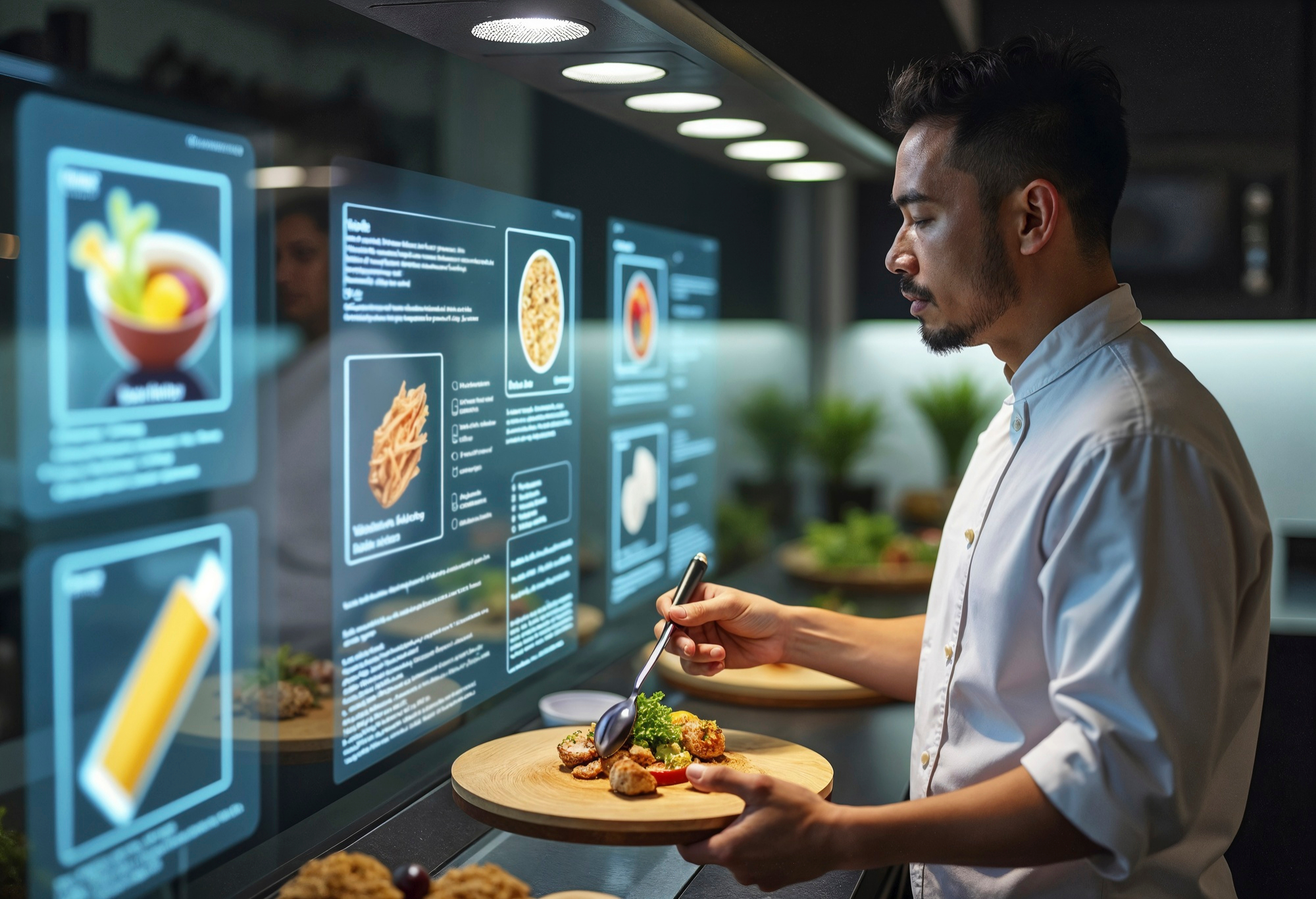
The Art of Menu Engineering: Maximizing Profitability in Dubai Restaurants
Your menu is doing far more than simply listing your dishes and their prices. Every day, it’s either generating maximum profit or quietly leaving thousands of dirhams on the table. In Dubai’s fiercely competitive restaurant landscape, where margins are tight and customer expectations are sky-high, the difference between a strategically engineered menu and a haphazard list of offerings can determine whether your establishment thrives or merely survives.
Menu engineering is the systematic approach to optimizing your menu for profitability by analyzing sales data, food costs, and customer psychology. It’s a discipline that combines hard numbers with soft skills, merging financial analysis with design aesthetics and behavioral science. While many restaurant owners in Dubai invest heavily in interior design, chef talent, and marketing campaigns, they often overlook their most powerful sales tool—the menu itself.
Consider this: research shows that customers spend an average of just three minutes reviewing a menu before making their decision. In those critical 180 seconds, your menu must capture attention, communicate value, guide choices, and ultimately drive profitable sales. When executed correctly, menu engineering for Dubai restaurants can increase profitability by 10 to 15 percent without adding a single new customer or expanding your seating capacity.
This comprehensive guide will walk you through the complete menu engineering process, from understanding the fundamental matrix that categorizes your dishes to implementing psychological pricing strategies that influence customer behavior. Whether you operate a casual café in JBR or a fine dining establishment in Downtown Dubai, these principles will help you transform your menu into a profit-generating powerhouse.
Understanding Menu Engineering: More Than Just a Pretty Design
What is Menu Engineering?
Menu engineering is a data-driven methodology for evaluating and optimizing restaurant menus based on two critical factors: popularity and profitability. Developed as a systematic framework for menu analysis, it moves beyond subjective opinions about which dishes should stay or go, instead relying on concrete sales data and cost calculations to guide strategic decisions.
At its core, menu engineering involves calculating the food cost and contribution margin for each menu item, analyzing sales volume over a defined period, and then categorizing items based on their performance. This process reveals which dishes are your profit champions, which are underperforming, and which are actively hurting your bottom line. Armed with this intelligence, you can make informed decisions about pricing adjustments, menu placement, promotional strategies, and item elimination.
In Dubai’s restaurant market, where ingredient costs can fluctuate significantly due to import dependencies and where customer demographics span from budget-conscious residents to ultra-high-net-worth tourists, menu engineering becomes even more critical. The ability to precisely understand which dishes deliver the best return on investment allows you to allocate your kitchen resources, staff attention, and marketing efforts where they’ll generate the greatest impact.
The Business Case for Menu Engineering
The financial impact of proper menu engineering cannot be overstated. Industry data consistently shows that restaurants implementing comprehensive menu engineering strategies achieve profit increases of 10 to 15 percent. For a restaurant generating AED 100,000 in monthly revenue, this translates to an additional AED 10,000 to 15,000 in profit—money that flows directly to your bottom line without requiring additional covers, expanded hours, or increased marketing spend.
This improvement comes from multiple sources. First, you identify and promote high-margin items that customers already enjoy. Second, you adjust pricing on popular items that have been underpriced relative to their value. Third, you eliminate or reimagine low-performing dishes that consume kitchen time, inventory space, and menu real estate without delivering adequate returns. Fourth, you strategically position items on your menu to guide customers toward more profitable choices.
In Dubai’s competitive environment, where restaurant profit margins typically hover between 5 and 10 percent, an additional 10 to 15 percent improvement in profitability can be transformative. It provides the financial cushion needed to weather slow periods, invest in staff development, upgrade equipment, or expand your concept. Moreover, it creates a sustainable competitive advantage—while your competitors struggle with unfocused menus and unclear value propositions, your engineered menu works as a precision instrument for profit generation.
The Menu Engineering Matrix: Know Your Menu Items
The foundation of menu engineering is the classification matrix, which categorizes every item on your menu into one of four distinct groups based on their popularity and profitability. Understanding these categories is essential for developing effective strategies for each dish.
The Four Categories Explained
Stars – Your Winners
Stars are the dishes that every restaurant dreams of having in abundance. These items combine high popularity with high profitability, meaning customers love ordering them and you make excellent margins when they do. Stars are typically your signature dishes, the items that guests recommend to their friends, and the offerings that define your restaurant’s identity.
For a Dubai restaurant, stars might include a perfectly executed wagyu burger with premium toppings, a signature biryani with imported saffron, or a creative fusion dish that showcases your chef’s talents. These items justify their premium pricing through exceptional quality, unique preparation, or distinctive presentation. Customers willingly pay for them because they perceive clear value.
Your strategy for stars is straightforward: feature them prominently on your menu, maintain unwavering quality standards, protect their pricing, and ensure they never run out. Stars should occupy prime real estate in your menu design—the top right corner, the beginning of their category, or highlighted with visual elements. These are the items you want servers to recommend and the dishes you should showcase in your marketing materials and social media content.
Plow Horses – Popular but Not Profitable
Plow horses present a more complex challenge. These items are customer favorites with high sales volume, but they deliver disappointing profit margins. They’re called plow horses because they work hard (high volume) but don’t generate the returns you need. Common examples include pasta dishes, rice bowls, and other comfort foods that customers expect at certain price points.
In the Dubai market, plow horses might be your standard chicken shawarma, basic pasta dishes, or entry-level burgers. Customers order them frequently, but the combination of ingredient costs, preparation time, and competitive pricing pressures means you’re barely making money on each sale. The challenge is that these items often serve as traffic drivers—customers come for these familiar options and then potentially order more profitable appetizers, desserts, or beverages.
Your strategy for plow horses involves careful calibration. You can attempt modest price increases, testing whether customers will accept a slightly higher price point. You can reduce portion sizes while maintaining perceived value. You can source less expensive ingredients without compromising quality. Or you can reposition these items as loss leaders while ensuring customers add high-margin sides, drinks, or desserts to their orders. The key is finding ways to improve margins without destroying the popularity that makes these items valuable.
Puzzles – Profitable but Not Popular
Puzzles are perhaps the most frustrating category. These dishes deliver excellent profit margins—often your highest—but customers simply aren’t ordering them. They might be too unfamiliar, poorly described, badly positioned on the menu, or inadequately promoted by your service staff. The name “puzzle” reflects the mystery of why such profitable items aren’t selling.
Examples might include premium seafood dishes, exotic preparations, or innovative creations that showcase expensive ingredients. In Dubai, this could be a high-end Omani lobster dish, a premium Japanese wagyu preparation, or a sophisticated tasting menu option. The ingredients and execution justify premium pricing, but for various reasons, customers aren’t biting.
Your strategy for puzzles focuses on increasing visibility and appeal. Rename dishes with more enticing descriptions. Add professional photography to showcase their visual appeal—this is where working with specialists like Effective Agency can make a significant difference, as their expertise in food photography and menu design can transform how these items are perceived. Reposition them on the menu to more prominent locations. Train servers to recommend them enthusiastically. Create limited-time promotions to drive trial. The goal is to convert puzzles into stars by maintaining their profitability while dramatically increasing their popularity.
Dogs – Remove or Reimagine
Dogs are the items you need to seriously consider removing from your menu. They combine low popularity with low profitability, meaning few customers order them and you make little money when they do. These dishes occupy valuable menu space, consume inventory, complicate kitchen operations, and confuse customers with too many choices—all while delivering minimal returns.
Dogs often result from failed experiments, outdated menu items that once worked but no longer resonate, or dishes added to please a specific customer that never gained broader appeal. In a Dubai restaurant, this might be an obscure regional dish that doesn’t connect with your diverse customer base, a health-conscious option that nobody orders, or a complicated preparation that ties up kitchen resources for minimal payoff.
Your strategy for dogs is simple: remove them from the menu entirely or completely reimagine them. If you’re emotionally attached to a dish or believe it serves a strategic purpose, you need to fundamentally rethink the concept, ingredients, pricing, and positioning. Otherwise, eliminating dogs streamlines your menu, simplifies kitchen operations, reduces inventory complexity, and makes room for items with better potential. Remember that every item on your menu should earn its place—dogs simply don’t.
How to Calculate and Categorize Your Menu Items?
Implementing menu engineering requires systematic data collection and analysis. Here’s the step-by-step process for categorizing your menu items:
- Step 1: Choose Your Analysis Period. Select a representative timeframe—typically 30 to 90 days—that captures normal business patterns. Avoid periods with unusual events, holidays, or promotions that might skew results.
- Step 2: Calculate Food Cost for Each Item. Determine the exact cost of ingredients for every dish. Include all components: proteins, vegetables, starches, sauces, garnishes, and accompaniments. Be precise—even small errors multiply across hundreds of servings.
- Step 3: Determine Contribution Margin. Subtract the food cost from the selling price to find each item’s contribution margin. This is the amount each sale contributes to covering fixed costs and generating profit. A dish selling for AED 75 with a food cost of AED 22 has a contribution margin of AED 53.
- Step 4: Analyze Sales Volume. Pull sales data from your POS system for your chosen period. Count how many times each item was ordered. Calculate the average sales volume across all items.
- Step 5: Plot Items on the Matrix. Create a simple matrix with popularity on one axis and profitability on the other. Items above average in both dimensions are stars. Items above average in popularity but below average in profitability are plow horses. Items above average in profitability but below average in popularity are puzzles. Items below average in both are dogs.
- Step 6: Develop Category-Specific Strategies. Based on each item’s classification, implement the appropriate strategies discussed above. Monitor results and adjust as needed.
Modern POS systems and restaurant management software can automate much of this analysis, generating reports that categorize your menu items and highlight opportunities for improvement. The investment in proper tools pays for itself quickly through the insights gained and actions taken.
The Psychology Behind Menu Design
While the menu engineering matrix provides the analytical foundation, understanding customer psychology transforms that data into actionable design decisions. The way customers interact with menus, process information, and make choices is governed by predictable patterns that savvy restaurateurs can leverage.
How Customers Read Menus?
Eye-tracking studies have revealed consistent patterns in how diners scan and read menus. Understanding these patterns allows you to position high-profit items where they’ll receive maximum attention. The most common patterns include the Golden Triangle, where eyes naturally move to the center of the page first, then to the top right corner, and finally to the top left. For two-panel menus, the top right corner of the right-hand page is considered prime real estate.
Another common pattern is the Z-pattern, where eyes scan from top left to top right, then diagonally down to bottom left, and across to bottom right. Single-panel menus often follow this pattern. The F-pattern is common for list-style menus, where eyes scan horizontally across the top, then down the left side, with occasional horizontal scans for items that catch attention.
Customers also tend to remember the first and last items in each category better than those in the middle—a phenomenon known as the serial position effect. This means the beginning and end of each menu section are valuable positioning opportunities for your stars and puzzles. Items buried in the middle of long lists receive less attention and consideration.
In Dubai’s multilingual environment, you must also consider how customers navigate menus in multiple languages. Arabic readers scan from right to left, which reverses some traditional eye movement patterns. Effective menu design for the UAE market requires cultural sensitivity and, often, separate layouts optimized for different languages rather than simple translations.
Color Psychology in Menu Design
Colors are not merely decorative elements—they’re powerful psychological triggers that influence mood, appetite, and decision-making. Research in color psychology reveals specific associations and effects that menu designers can harness strategically.
Red and orange are the most powerful appetite stimulants. These warm colors create a sense of urgency and excitement while literally making people feel hungrier. Many successful restaurant brands incorporate red or orange in their logos and menu designs for precisely this reason. In menu engineering, using red or orange to highlight high-profit items can increase their selection rate.
Green has become increasingly important in restaurant design, particularly for health-conscious and organic offerings. It signals freshness, natural ingredients, and environmental consciousness. For Dubai restaurants emphasizing healthy options or farm-to-table concepts, strategic use of green reinforces these brand values and guides health-conscious diners toward specific choices.
Yellow captures attention and creates feelings of happiness and optimism. It’s excellent for highlighting special offers or limited-time items. However, yellow can be overwhelming if overused, so it works best as an accent color rather than a dominant theme.
Blue presents an interesting paradox. While it conveys trust, calmness, and sophistication, it can actually suppress appetite—there are very few naturally blue foods, and humans have evolved to be cautious about blue items. Fine dining establishments sometimes use blue in branding to convey exclusivity, but it’s rarely used to highlight food items themselves.
Black and white provide maximum contrast and readability. Menu engineer Gregg Rapp notes that black ink on white paper offers the clearest, most readable combination. This classic approach works particularly well for upscale establishments seeking an elegant, timeless aesthetic. The simplicity also ensures that food descriptions and strategic highlights stand out clearly.
For Dubai restaurants, color choices should also consider cultural associations and preferences. While Western color psychology provides useful guidelines, understanding how your specific customer demographics respond to different colors can refine your approach.
Typography and Readability
Font selection might seem like a minor detail, but typography significantly impacts how customers perceive your restaurant and process menu information. The right fonts enhance readability, reinforce brand identity, and guide attention to key items. The wrong fonts create confusion, appear unprofessional, or make menus difficult to read in typical restaurant lighting.
Serif fonts (like Times New Roman or Garamond) convey tradition, elegance, and sophistication. They work well for fine dining establishments, classic concepts, and restaurants emphasizing heritage or authenticity. The small decorative strokes (serifs) at the ends of letters can enhance readability in printed materials, though they’re sometimes less effective on digital screens.
Sans-serif fonts (like Helvetica or Arial) project modernity, cleanliness, and simplicity. They’re excellent for contemporary concepts, fast-casual restaurants, and digital menus. Their clean lines work well across different media and maintain readability at various sizes.
Script fonts can add personality and elegance but must be used sparingly. They work for restaurant names, section headers, or highlighting special items, but they’re difficult to read in large blocks of text. A common mistake is using elaborate script fonts for dish descriptions, forcing customers to work too hard to understand their options.
The cardinal rule of menu typography is limitation: use no more than two or three different fonts throughout your menu. One font for headers, one for body text, and possibly one for accents creates visual hierarchy without chaos. More fonts create a cluttered, unprofessional appearance that undermines your brand.
Font size matters enormously, particularly in Dubai’s diverse market where you’re serving customers of different ages and visual capabilities. Body text should be at least 10-12 points, with headers proportionally larger. Consider your typical lighting conditions—dimly lit romantic restaurants need larger, bolder fonts than bright, casual cafés.
For multilingual menus serving Dubai’s international population, ensure that fonts support all necessary character sets. Arabic typography requires specific fonts designed for that script, and simply translating text without considering typographic requirements results in poor readability and unprofessional appearance.
The Power of Descriptive Language
The words you use to describe dishes have remarkable influence over customer choices and willingness to pay premium prices. Descriptive language transforms a simple list of ingredients into an enticing narrative that engages the senses, creates anticipation, and justifies pricing.
Sensory words that evoke taste, smell, texture, and visual appeal make dishes more appealing. Compare “Grilled chicken with vegetables” to “Succulent herb-marinated chicken breast, char-grilled to perfection, accompanied by crisp seasonal vegetables.” The second description creates a vivid sensory experience that makes the dish more desirable and justifies a higher price point.
Origin and provenance matter increasingly to sophisticated diners. Specifying “Norwegian salmon,” “Omani lobster,” “Australian wagyu,” or “locally-sourced organic tomatoes” adds value and interest. In Dubai, where customers appreciate quality ingredients from around the world, highlighting provenance can significantly enhance perceived value.
Preparation methods that suggest care, skill, and time investment make dishes more appealing. Words like “slow-roasted,” “hand-crafted,” “carefully selected,” “aged,” “marinated overnight,” or “prepared to order” signal quality and justify premium pricing. They tell customers that they’re paying for expertise and attention, not just ingredients.
Cultural authenticity resonates in Dubai’s multicultural environment. For ethnic cuisines, using authentic terminology (with translations) and explaining traditional preparation methods adds interest and credibility. A “Hyderabadi Dum Biryani, slow-cooked in the traditional sealed pot method” is more compelling than simply “Chicken Biryani.”
The optimal length for menu descriptions is typically two to three lines. Shorter descriptions don’t provide enough information to entice and justify pricing. Longer descriptions become tedious and slow down decision-making. The goal is to provide just enough evocative detail to make the dish appealing without overwhelming customers during their three-minute decision window.
Pricing Psychology: The Numbers Game
How you present prices on your menu has as much psychological impact as the actual numbers themselves. Decades of research into pricing psychology have revealed specific tactics that influence customer perception and behavior.
Charm Pricing and the .99 Effect
Charm pricing—ending prices in .99 rather than round numbers—is one of the most widely used psychological pricing tactics. The reason is simple: it works. A dish priced at AED 49.99 is perceived as significantly cheaper than one priced at AED 50, even though the actual difference is negligible.
This phenomenon, known as the left-digit effect, occurs because people process prices from left to right and give disproportionate weight to the first digit. The brain categorizes AED 49.99 as “in the 40s” rather than “essentially 50,” creating a perception of better value. Research consistently shows that charm pricing can increase sales of affected items by several percentage points.
However, charm pricing isn’t universally appropriate. Fine dining establishments and luxury concepts often use round numbers to reinforce premium positioning. A tasting menu priced at AED 500 conveys exclusivity and quality better than one priced at AED 499.99. The slight savings implied by charm pricing can actually undermine luxury positioning by suggesting price sensitivity.
For most Dubai restaurants operating in the mid-range market, charm pricing is an effective tool for popular items and plow horses where price sensitivity is higher. For premium items and stars where you’re selling quality and experience rather than value, round numbers often work better.
Removing Currency Symbols
A subtle but effective tactic is removing currency symbols (AED, Dhs, or dirham signs) from menu prices. Research shows that currency symbols create a stronger association with spending money and can trigger what behavioral economists call “the pain of paying”. By presenting prices as simple numbers—”49″ rather than “AED 49” or “Dhs 49″—you reduce this psychological pain and make customers more comfortable with their spending.
This practice has become standard in upscale restaurants worldwide and is increasingly common across all restaurant segments in Dubai. The effect is subtle but measurable—customers tend to spend more when currency symbols are absent. Combined with other tactics like embedding prices within descriptions rather than listing them in columns, this approach shifts focus from cost to value.
Decoy Pricing Strategies
Decoy pricing is a sophisticated tactic that uses a strategically placed expensive item to make other items seem more reasonably priced. The classic example is the three-tier pricing model: small, medium, and large portions or basic, premium, and deluxe options.
When you offer three choices, customers rarely select the most expensive option. However, the presence of that expensive option makes the middle option seem like better value—not too cheap, not too expensive, just right. This is called the compromise effect, and it’s remarkably effective at guiding customers toward your target price point.
For example, if you offer a burger at AED 45, AED 65, and AED 95, most customers will choose the AED 65 option. It seems like a reasonable middle ground, avoiding both the cheapest option (which might seem low quality) and the most expensive (which might seem excessive). If you had only offered the AED 45 and AED 65 options, many more customers would choose the cheaper one.
In menu engineering for Dubai restaurants, decoy pricing works particularly well for beverages, where you can offer standard, premium, and super-premium options. The super-premium option might rarely sell, but its presence increases sales of the premium option, which is exactly where you want customers.
Anchor Pricing Techniques
Anchoring is a cognitive bias where people rely heavily on the first piece of information they receive when making decisions. In menu design, this means the first price customers see sets their expectations for all subsequent prices.
Placing your most expensive item at the beginning of a category creates a high anchor point. When customers then see other items priced lower, those prices seem more reasonable by comparison. A AED 250 steak at the top of the menu makes a AED 120 seafood dish seem like a relative bargain, even though AED 120 is objectively expensive.
This tactic is particularly effective in Dubai’s luxury dining market, where high-net-worth customers aren’t necessarily price-sensitive but still use anchoring to evaluate value. By strategically positioning premium items first, you can increase the average check size across your entire menu without changing any individual prices.
Price Placement and Formatting
How and where you display prices on your menu significantly impacts customer behavior. The cardinal rule is simple: never align prices in a column. When prices are listed in a neat column on the right side of the page, customers’ eyes are drawn directly to the numbers, and they begin comparison shopping based primarily on price rather than value or appeal.
Instead, embed prices within or immediately after dish descriptions, using the same or slightly smaller font. This forces customers to read the description before seeing the price, allowing you to sell the value and appeal before revealing the cost. By the time they reach the price, they’ve already become interested in the dish, making them more likely to accept the cost.
Use smaller font sizes for prices compared to dish names and descriptions. This subtle visual hierarchy emphasizes what you’re selling (delicious food) rather than what it costs. The price should be visible and clear but not the dominant visual element.
Avoid unnecessary decimal places for round numbers. Write “50” rather than “50.00”—the extra zeros add no information and make the price appear more expensive by drawing attention to it. For prices with cents, the .99 charm pricing discussed earlier is your only reason to include decimals.
Menu Layout and Design Best Practices
The physical layout of your menu—its size, format, and organizational structure—creates the framework within which all other menu engineering tactics operate. Getting the layout right is essential for guiding customer attention and facilitating profitable choices.
Choosing the Right Menu Format
Menu format significantly impacts both customer behavior and your ability to influence their choices. Menu engineer Gregg Rapp’s research identified clear patterns in how different formats perform.
One-panel menus lead to faster customer decisions, which might seem desirable for high-turnover concepts. However, customers also tend to order less with one-panel menus, resulting in lower average check sizes. The limited space forces you to feature fewer items, and the compact format doesn’t create the sense of a full dining experience. One-panel menus work best for limited concepts like breakfast cafés or quick-service establishments.
Two-panel menus are considered optimal for most restaurants. They provide enough space to showcase your full offering without overwhelming customers. The format creates natural focal points—particularly the top right corner of the right panel—where you can position high-profit items. Two-panel menus also evoke a sense of a complete dining experience while remaining easy for customers to navigate.
Three-panel menus become necessary when you have extensive offerings across multiple categories. They provide the space needed for comprehensive menus but sacrifice some control over customer attention. With more real estate to cover, customers’ eyes wander more, and strategic positioning becomes less effective. If you need three panels, ensure your highest-profit items occupy the prime positions on the center and right panels.
Multi-panel menus (four or more panels) significantly reduce your ability to guide customer choices. With so much information to process, customers develop their own scanning patterns, and your strategic positioning has minimal impact. Multi-panel menus are sometimes necessary for establishments with very diverse offerings, but they should be avoided when possible. Consider splitting into separate menus for different dayparts or categories instead.
In Dubai’s evolving restaurant landscape, digital menus accessed via QR codes have become increasingly prevalent. Platforms like QRHUB enable restaurants to combine the best aspects of different formats while adding dynamic capabilities like real-time updates, multilingual options, and rich media content. Digital menus also provide valuable analytics about which items customers view most frequently, informing your menu engineering decisions.
The Golden Triangle and Eye Magnets
Understanding where customers naturally focus their attention allows you to position high-profit items strategically. The Golden Triangle concept identifies the center of the page, top right corner, and top left corner as the areas receiving the most visual attention on two-panel menus. Items placed in these locations receive disproportionate consideration.
Eye magnets—visual elements like boxes, borders, icons, or color highlights—can draw attention to specific items regardless of their position. Research by Gregg Rapp found that featuring just one graphic element per page can increase sales of that highlighted item by up to 30 percent. However, the effectiveness diminishes rapidly with each additional graphic element. Too many highlights create visual clutter where nothing stands out.
The key is restraint. Identify your top two or three items per page—typically your stars and your most promising puzzles—and use subtle visual cues to draw attention. A simple box around the description, a small icon indicating “chef’s recommendation,” or a splash of color is sufficient. Avoid the temptation to highlight everything important; when everything is emphasized, nothing is.
For Dubai restaurants serving diverse international clientele, consider that visual scanning patterns can vary by culture. While the principles discussed here apply broadly, testing different layouts with your specific customer base can reveal opportunities for optimization.
Strategic Item Placement
Beyond general eye movement patterns, specific positions on your menu carry different weights in customer decision-making. The primacy effect means customers remember items at the beginning of a list better than those in the middle. The recency effect means they also remember items at the end well. Items in the middle receive less attention and consideration.
This creates a strategic opportunity: place your stars and puzzles at the beginning and end of each category, with your plow horses and dogs (if you haven’t eliminated them yet) in the middle. Customers will naturally gravitate toward the items you want them to order while giving less consideration to lower-profit options.
Grouping and categorization also influence choices. How you organize your menu into sections—appetizers, mains, desserts, or alternative schemes like “from the grill,” “from the sea,” “from the garden”—affects how customers navigate and select items. Creative categorization can highlight your strengths and guide customers toward profitable sections.
White space—the empty areas around text and images—is not wasted space but rather a crucial design element that prevents cognitive overload. Menus crammed with text and images overwhelm customers, making decisions harder and less satisfying. Generous white space creates a sense of sophistication, makes individual items stand out, and facilitates easier decision-making.
The Paradox of Choice
Psychological research has consistently demonstrated that while people claim to want extensive choices, too many options actually decrease satisfaction and can paralyze decision-making. This paradox of choice has important implications for menu design.
The magic number, according to menu psychology research, is approximately seven items per category. This aligns with cognitive psychology findings about working memory capacity. When categories exceed seven to nine items, customers struggle to evaluate all options, often defaulting to familiar choices or becoming frustrated with the decision process.
For Dubai restaurants with extensive offerings, this creates a challenge. The solution is strategic menu streamlining—eliminating dogs, combining similar items, and organizing offerings into logical subcategories that each contain manageable numbers of choices. A menu with five appetizers, seven mains, and four desserts is more effective than one with fifteen appetizers, twenty mains, and eight desserts, even though the latter offers more options.
Another approach is menu segmentation by daypart or occasion. Rather than presenting one massive menu covering breakfast, lunch, and dinner, create separate menus for each service period. This reduces the number of choices customers face at any given time while allowing you to maintain a diverse overall offering. Digital menu solutions from providers like QRHUB make this approach particularly practical, allowing seamless transitions between different menu configurations throughout the day.
Menu Engineering for Dubai’s Unique Market
Dubai’s restaurant landscape presents unique considerations that influence menu engineering strategies. The city’s extraordinary diversity, luxury positioning, and cultural context require thoughtful adaptation of general principles.
Cultural Considerations
Dubai’s position as a Muslim-majority emirate with significant cultural traditions means certain menu elements require special attention. Halal certification should be prominently displayed if applicable, as this is a fundamental requirement for many customers. Even restaurants serving alcohol typically ensure their food offerings are halal-certified, and this certification deserves clear communication on the menu.
Arabic language integration is both a cultural courtesy and a practical necessity. While English is widely spoken, providing Arabic translations demonstrates respect for local culture and serves Emirati and Arabic-speaking customers. Professional translation is essential—poor translations undermine your brand and can create confusion or unintended humor. Agencies specializing in the UAE restaurant marketing, such as Effective, understand these linguistic and cultural nuances and can ensure your menu communicates effectively across languages.
Ramadan and special occasion menus represent significant opportunities in Dubai’s calendar. During Ramadan, Iftar and Suhoor menus require different engineering than regular offerings. These are high-volume, high-value occasions where customers expect special presentations and are willing to pay premium prices for quality experiences. Engineering these seasonal menus separately from your standard offerings maximizes their profit potential.
Family-style dining is more common in Middle Eastern culture than in Western contexts. Menu engineering should consider how dishes are shared, offering appropriate portion sizes and combinations that work for group dining. Highlighting dishes that are ideal for sharing and creating family-style packages can increase average check sizes significantly.
Catering to Dubai’s Diverse Demographics
Dubai’s population is approximately 85% expatriate, representing virtually every nationality and culinary tradition. This extraordinary diversity creates both challenges and opportunities for menu engineering.
Expatriate preferences vary dramatically by nationality. British expatriates might seek familiar comfort foods, Indian expatriates want authentic regional cuisines, Filipino expatriates appreciate specific flavor profiles, and so on. Understanding your specific customer demographics allows you to engineer your menu to match their preferences and price sensitivities.
Tourist-friendly design is essential for restaurants in high-traffic areas. International visitors may be unfamiliar with local ingredients, preparation methods, or even currency. Clear descriptions, visual aids, and intuitive organization help tourists navigate your menu confidently. Consider including small icons indicating spice levels, dietary restrictions, or signature items to aid quick decision-making.
Multilingual capabilities extend beyond just Arabic and English. Depending on your location and concept, you might benefit from Chinese, Russian, French, or other language options. Digital menu platforms make multilingual support practical and cost-effective, automatically displaying menus in customers’ preferred languages based on their device settings or manual selection.
Price sensitivity varies dramatically across customer segments. Tourists and high-income expatriates may be relatively price-insensitive, while resident families and budget-conscious demographics carefully evaluate value. Menu engineering should offer options across different price points, allowing you to serve multiple segments profitably. Your stars might appeal to premium customers while your strategically priced plow horses attract value-seekers.
Premium Positioning in Luxury Market
Dubai’s reputation as a luxury destination creates opportunities for premium positioning that might not exist in other markets. High-net-worth individuals, both residents and tourists, actively seek exceptional dining experiences and are willing to pay accordingly.
Luxury menu design elements signal quality and exclusivity. Premium paper stock, sophisticated typography, leather-bound covers, and refined visual design all contribute to perceived value. These physical elements justify premium pricing by creating an overall experience of luxury. This is where professional menu design services prove their worth—the difference between a well-designed luxury menu and an amateur attempt is immediately apparent and significantly impacts customer willingness to pay.
Exclusive offerings and limited editions appeal to Dubai’s luxury market. Featuring rare ingredients, limited-availability dishes, or seasonal specialties creates a sense of exclusivity that justifies premium pricing. Highlighting scarcity—”limited daily preparation,” “subject to availability,” or “seasonal offering”—increases perceived value and urgency.
VIP and private dining menus represent opportunities for ultra-premium positioning. Separate menus for private dining rooms or VIP sections can feature elevated offerings at higher price points without affecting your main dining room positioning. These exclusive menus become profit centers while enhancing your restaurant’s prestige.
Tasting menus and chef’s selections work particularly well in Dubai’s fine dining segment. These formats allow you to showcase your best work, control costs through precise portioning, and command premium prices. Menu engineering for tasting menus focuses on the overall experience and price point rather than individual dish profitability, though you should still ensure the combined food costs deliver appropriate margins.
The Role of Professional Menu Design
While the analytical aspects of menu engineering can be handled internally with proper tools and training, the design and execution often benefit significantly from professional expertise.
Why DIY Menus Fall Short?
Many restaurant owners attempt to design their own menus, often using templates or basic design software. While this approach saves money initially, it typically costs far more in lost revenue over time. Common mistakes include poor typography that’s difficult to read, amateur photography that makes food look unappealing, cluttered layouts that overwhelm customers, and lack of strategic positioning that fails to guide profitable choices.
The cost of amateur menu design compounds over time. Every day your menu operates below its potential, you’re leaving money on the table. If proper menu engineering could increase your profitability by 10 percent, and you’re generating AED 100,000 in monthly revenue, a DIY menu is costing you AED 10,000 per month in lost profit. Over a year, that’s AED 120,000—far more than the cost of professional design services.
Brand perception suffers with amateur menus. Your menu is often the first detailed interaction customers have with your brand. A poorly designed menu signals lack of attention to detail, questionable quality standards, and amateur operations. In Dubai’s competitive market where customers have countless dining options, first impressions matter enormously.
Working with Menu Design Experts
Professional menu designers bring specialized expertise that goes beyond general graphic design. They understand food, gastronomy, customer psychology, and the specific requirements of restaurant menus. This specialized knowledge translates directly into more effective, more profitable menus.
Agencies like Effective, which focus specifically on Dubai’s restaurant market, understand the unique cultural, linguistic, and demographic considerations discussed earlier. Their team comprises designers who are also food enthusiasts, ensuring that design decisions enhance rather than detract from the culinary story you’re telling.
Tailored designs reflect your specific concept, whether you operate a cozy café, an upscale bistro, or a global fusion eatery. Professional designers don’t apply cookie-cutter templates but rather craft custom solutions that mirror your unique essence and appeal to your target customers. This customization extends to every element—color palette, typography, layout, imagery, and descriptive language.
Dynamic adaptability is another advantage of professional design. Restaurants need to update menus regularly for seasonal ingredients, special promotions, and menu evolution. Professional designers create systems that allow easy updates while maintaining visual consistency and brand identity. This flexibility is essential for implementing the ongoing optimization that menu engineering requires.
Optimal usability distinguishes professional menus from amateur attempts. Professional designers prioritize readability, logical grouping, and easy navigation to enhance the guest experience. They understand how lighting conditions, table sizes, and customer demographics affect menu usability and design accordingly.
Sustainable solutions are increasingly important in Dubai’s environmentally conscious market. Professional designers can recommend eco-friendly print materials, create digital menu designs for contactless browsing, and develop solutions that balance sustainability with luxury positioning.
Digital Menu Solutions
The shift toward digital menus, accelerated by the pandemic but continuing due to their inherent advantages, represents a significant opportunity for menu engineering. Digital platforms offer capabilities impossible with printed menus while reducing costs and environmental impact.
Real-time updates mean you can adjust prices, add daily specials, or remove sold-out items instantly without reprinting. This flexibility is invaluable for implementing dynamic pricing strategies, responding to ingredient cost fluctuations, or testing different menu configurations.
Rich media integration allows you to include high-quality food photography, videos of preparation techniques, or even customer reviews for each dish. These elements significantly enhance appeal and help customers make confident choices, particularly for unfamiliar items or complex preparations.
Analytics and insights from digital menus reveal which items customers view most frequently, how long they spend on each section, and where they abandon the browsing process. This data informs menu engineering decisions, showing which items generate interest (even if not ordered) and which are overlooked entirely.
Multilingual support becomes seamless with digital menus, automatically displaying content in customers’ preferred languages. This capability is particularly valuable in Dubai’s international market, where serving customers in their native language enhances experience and increases spending.
Integration with ordering systems streamlines operations, allowing customers to place orders directly from their devices. This reduces server workload, minimizes order errors, and can increase average check sizes by making it easier for customers to add items.
Platforms like QRHUB specialize in restaurant-specific digital menu solutions, offering features designed specifically for food service operations rather than generic digital publishing tools. Their expertise ensures that digital menus enhance rather than complicate the dining experience.
Food Cost Management and Pricing
Effective menu engineering requires rigorous food cost management. Understanding and controlling your costs is the foundation upon which all pricing and profitability strategies are built.
Calculating Your Food Costs
The basic food cost formula is straightforward: (Beginning Inventory + Purchases – Ending Inventory) / Sales = Food Cost Percentage. However, calculating food costs for individual menu items requires more detailed analysis.
For each dish, you must account for every ingredient, including proteins, vegetables, starches, sauces, garnishes, and even seemingly minor elements like herbs or cooking oils. Precision matters—a dish you think costs AED 18 to prepare might actually cost AED 22 when you account for all components, and that AED 4 difference multiplied across hundreds of servings significantly impacts profitability.
Target food cost percentages typically range from 28 to 35 percent for most restaurants, though this varies by concept. Fine dining establishments might operate at 30-35 percent due to premium ingredients and complex preparations. Fast-casual concepts might target 25-30 percent. Beverage costs are typically much lower, often 20-25 percent, which is why encouraging beverage sales significantly improves overall profitability.
Dubai-specific cost considerations include the reality that many ingredients are imported, subjecting them to currency fluctuations, shipping costs, and supply chain disruptions. Building relationships with reliable suppliers, negotiating volume discounts, and maintaining some menu flexibility to substitute ingredients when necessary all help manage these challenges.
Tracking and monitoring systems are essential for maintaining cost control. Modern restaurant management software integrates with inventory systems and POS data to provide real-time food cost tracking. Regular variance analysis—comparing theoretical food costs (based on recipes and portions) to actual costs (based on inventory usage)—identifies problems like waste, theft, or portion control issues.
Pricing Strategies for Profitability
With accurate food cost data, you can implement strategic pricing that ensures profitability while remaining competitive and appealing to customers.
Cost-plus pricing is the most straightforward approach: calculate your food cost and multiply by a factor (typically 3 to 3.5) to determine your selling price. A dish with a AED 20 food cost would be priced at AED 60-70. This method ensures you cover costs and achieve your target food cost percentage, but it ignores customer value perception and competitive positioning.
Value-based pricing considers what customers are willing to pay based on perceived value rather than just your costs. A signature dish with unique preparation, premium ingredients, or exceptional presentation might command prices well above a simple cost-plus calculation. This approach maximizes profitability for your stars and puzzles while requiring deeper understanding of customer psychology and competitive positioning.
Competitive pricing analysis examines what similar restaurants charge for comparable items. In Dubai’s transparent market where customers can easily compare options, your pricing must be defensible relative to competitors. This doesn’t mean matching their prices—you might justify premiums through superior quality, larger portions, better ambiance, or unique preparations—but you must understand the competitive landscape.
Premium vs. value positioning represents a fundamental strategic choice. Premium positioning allows higher prices but requires consistently delivering exceptional quality and experience. Value positioning attracts price-sensitive customers but requires tight cost control and operational efficiency. Most restaurants occupy a middle ground, offering both premium items for customers seeking special experiences and value options for everyday dining.
Seasonal pricing adjustments respond to ingredient cost fluctuations. When certain ingredients become more expensive or scarce, adjusting prices for affected dishes maintains margins. Conversely, when ingredients are abundant and cheap, modest price reductions can drive volume. Digital menus make these adjustments practical without reprinting costs.
Managing Ingredient Costs in Dubai
Dubai’s unique position as an import-dependent market creates specific challenges and opportunities for ingredient cost management.
Local vs. imported ingredients present a fundamental choice. Local ingredients—primarily from the UAE farms or nearby Gulf countries—offer fresher products, lower transportation costs, and sustainability benefits. However, selection is limited, and some items may be more expensive than imports due to scale limitations. Imported ingredients provide access to global products but incur shipping costs and longer supply chains.
Supplier relationships and negotiations are critical for cost management. Building strong relationships with multiple suppliers provides leverage for negotiations, ensures consistent quality, and creates backup options when supply issues arise. Volume commitments can secure better pricing, but they require accurate forecasting to avoid waste.
Menu flexibility based on availability allows you to substitute ingredients when primary options become expensive or scarce. Designing recipes with some flexibility—”seasonal vegetables” rather than specific varieties, or “fresh catch of the day” rather than specific fish—provides operational flexibility while maintaining menu appeal.
Waste reduction strategies directly impact food costs. Proper inventory management, accurate forecasting, appropriate portion sizes, and creative use of trim and byproducts all reduce waste. Some of the most profitable restaurants are also the most efficient, wasting virtually nothing.
Portion control systems ensure consistency and prevent over-portioning, which is essentially giving away profit. Standardized recipes, proper training, and occasional auditing ensure that the portions leaving your kitchen match your specifications and cost calculations.
Measuring Success and ROI
Menu engineering is not a one-time project but an ongoing process of measurement, analysis, and optimization. Tracking the right metrics allows you to evaluate success and identify opportunities for further improvement.
Key Metrics to Track
Sales per menu item reveals which dishes are actually moving. Compare current sales to historical data to identify trends. Items with declining sales might be candidates for repositioning, repricing, or removal, while items with increasing sales deserve analysis to understand what’s driving their success.
Food cost percentage by item shows whether individual dishes are meeting their target margins. Items with food costs above target need attention—either price increases, portion reductions, or ingredient substitutions to restore profitability.
Contribution margin changes track how much each dish contributes to covering fixed costs and generating profit. Monitor these margins over time to ensure they’re improving or at least maintaining acceptable levels.
Average check size is a critical overall metric. Successful menu engineering should increase average check size by guiding customers toward higher-priced items, encouraging add-ons, and improving the perceived value of premium options.
Customer satisfaction scores ensure that your menu engineering efforts aren’t undermining the dining experience. Monitor review sites, feedback forms, and social media sentiment to ensure customers remain happy with your offerings and pricing.
Menu item mix shows the percentage of sales coming from each category (stars, plow horses, puzzles, dogs). Ideally, you want an increasing percentage of sales from stars and a decreasing percentage from dogs and low-margin plow horses.
Common Pitfalls to Avoid
Even well-intentioned menu engineering efforts can fail if you fall into common traps.
Changing too much too fast overwhelms customers and staff. Introduce changes gradually, allowing time for customers to adapt and for you to measure results before making additional modifications.
Ignoring customer feedback in favor of pure data analysis can backfire. Sometimes customers love a dish for reasons that don’t show up in your spreadsheets. Balance quantitative analysis with qualitative feedback.
Focusing only on cost, not value leads to a race to the bottom. Constantly cutting costs and portions to improve margins eventually undermines quality and drives customers away. Focus on delivering value that justifies your pricing.
Overcomplicating the menu with too many items, confusing organization, or excessive descriptions creates decision paralysis. Simplicity and clarity serve customers better than comprehensiveness.
Neglecting visual hierarchy makes all items seem equally important, which means nothing stands out. Strategic use of typography, spacing, and visual elements guides attention to your most profitable offerings.
Copying competitors without strategy might seem safe but prevents differentiation. Your menu should reflect your unique concept, strengths, and target customers, not simply mimic what others are doing.
Conclusion
Menu engineering represents one of the highest-return investments available to restaurant operators. By systematically analyzing your menu’s performance, understanding customer psychology, and implementing strategic design and pricing, you can increase profitability by 10 to 15 percent without adding seats, extending hours, or increasing marketing spend. For a Dubai restaurant, this translates to tens of thousands of dirhams in additional annual profit flowing directly to your bottom line.
The process combines rigorous data analysis with creative design thinking. The menu engineering matrix provides the analytical foundation, categorizing your dishes as stars, plow horses, puzzles, or dogs and prescribing specific strategies for each. Psychological principles—from color and typography to pricing tactics and layout optimization—transform that analysis into effective design that guides customer choices toward profitable outcomes.
Dubai’s unique market characteristics—its extraordinary diversity, luxury positioning, cultural considerations, and competitive intensity—require thoughtful adaptation of general menu engineering principles. Success demands understanding not just universal psychology but also the specific preferences, sensitivities, and expectations of your target customers in this distinctive market.
While the analytical aspects of menu engineering can be managed internally with proper tools and training, the design and execution often benefit significantly from professional expertise. Agencies specializing in restaurant menu design bring specialized knowledge of food, gastronomy, customer psychology, and Dubai’s specific market dynamics. Their expertise accelerates results and ensures your menu performs as a precision instrument for profit generation rather than a simple list of offerings.
Your menu is your most important marketing tool, your primary sales vehicle, and a direct expression of your brand. It deserves the same strategic attention and investment that you give to your kitchen equipment, interior design, and staff training. When engineered properly, it becomes a powerful asset that generates returns year after year, adapting to changing costs, evolving customer preferences, and new competitive challenges.
The restaurants that thrive in Dubai’s intensely competitive market are those that master every aspect of their operations, leaving no opportunity for improvement unexplored. Menu engineering is not optional for serious operators—it’s a fundamental discipline that separates profitable, sustainable businesses from those that struggle despite serving excellent food. The question is not whether to engineer your menu but how quickly you can implement these proven strategies to capture the profit that’s currently being left on the table.
