

More Than Just Coffee
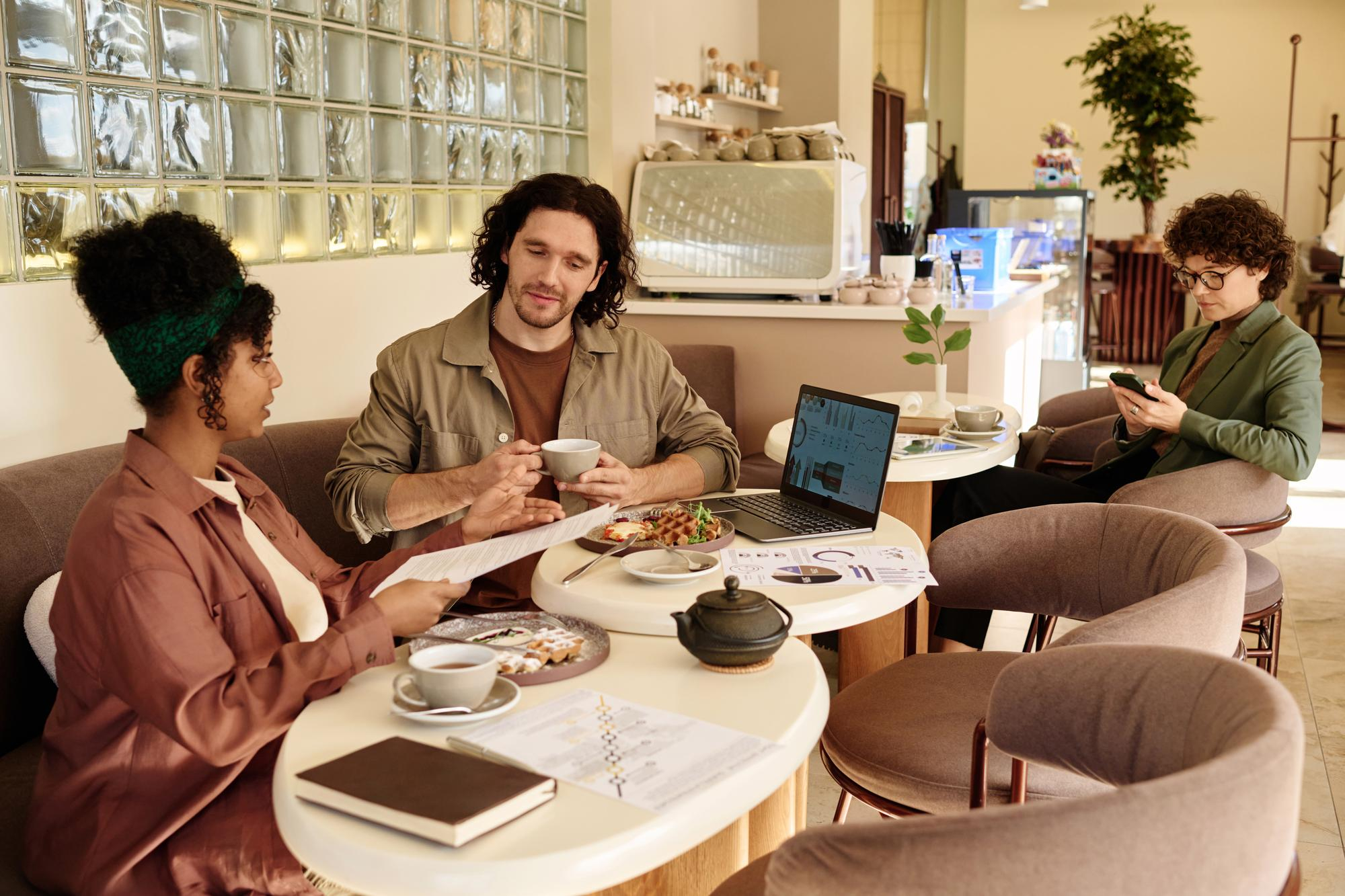
Step into any popular café in Dubai on a weekday morning. The air hums with a unique energy. The familiar clatter of ceramic on saucer and the hiss of the espresso machine are still there, but they are now the backing track to a different kind of activity. Laptops glow on nearly every table, their screens filled with spreadsheets, lines of code, and design mockups. A quiet but intense business meeting unfolds in one corner, while a solo entrepreneur, headphones on, is deep in focused work in another. This is the modern Dubai café: less a place for a quick caffeine hit and more a vibrant, unofficial coworking hub. The line between a coffee shop and an office has not just blurred; it has been completely erased. So, why are cafes popular for work in Dubai?
This phenomenon, often dubbed the “coffice” (coffee shop + office), is not unique to Dubai, but it has found a particularly fertile ground in this city. It represents a fundamental shift in how we think about work, productivity, and the spaces we inhabit. To understand the rise of cafés as workspaces in Dubai, we need to look beyond the appeal of a good flat white. We must explore a convergence of global work trends, the city’s unique demographic and urban DNA, and the deep-seated human need for community and connection. This article will dissect this trend, analyzing the key factors that have turned the humble café into the new corporate headquarters for a growing segment of Dubai’s workforce.
The Global Shift: The Rise of Remote Work and the Digital Nomad
To understand the boom in cafés as workspaces in Dubai, we must first zoom out and look at the global picture. The COVID-19 pandemic was a massive catalyst, forcing companies worldwide to adopt remote work policies overnight. What began as a temporary health measure quickly evolved into a permanent shift in work culture. Employees discovered the benefits of flexibility and autonomy, and many companies realized that productivity was not tied to a physical office. Post-pandemic, hybrid and fully remote work models have become the new normal for millions, with one study by Forbes noting that by 2025, 32.6 million Americans will be working remotely.
This decentralization of the workplace has led to a renewed interest in the concept of the “third space.” Coined by sociologist Ray Oldenburg in his 1989 book The Great Good Place, the term refers to places outside of our homes (the first space) and our traditional offices (the second space) where we can gather, socialize, and feel a sense of community. Historically, these were places like pubs, town squares, and, of course, coffee shops. In the age of remote work, the café has re-emerged as the quintessential third space, offering a place to work that is neither the isolating silence of a home office nor the rigid structure of a corporate building.
Recognizing this global trend, Dubai has actively positioned itself as a haven for this new class of mobile professionals. The launch of the Dubai digital nomad visa, officially known as the virtual working programme, was a masterstroke. It allows freelancers and remote employees of overseas companies to reside in the UAE for a year, provided they meet a minimum income threshold. This initiative has attracted a flood of talented, tech-savvy individuals from around the world, all of whom need a place to work, connect, and caffeinate.
The Dubai Context: A Perfect Storm for the “Coffice” Culture
While remote work is a global phenomenon, the coffice Dubai trend is amplified by a unique convergence of local factors. The city’s specific demographic makeup, urban design, and social dynamics have created a perfect storm, making it an exceptionally fertile ground for the rise of cafés as workspaces in Dubai.
- A Young, Tech-Savvy Population: Dubai’s population is overwhelmingly young and expatriate. This demographic is digitally native, highly adaptable, and comfortable with the tools and etiquette of remote work. They are not tied to the old paradigm of a 9-to-5 office job and are actively seeking flexible, dynamic work environments. This creates a massive, built-in customer base for work-friendly cafes.
- A City of Neighborhoods: Dubai’s urban planning has increasingly focused on creating self-sufficient, mixed-use neighborhoods. The “20-minute city” concept, a key part of the Dubai 2040 Urban Master Plan, aims to create communities where residents can access most of their daily needs within a short walk or bike ride. This encourages a more localized lifestyle, where popping down to a neighborhood café to work is far more appealing than a long commute to a distant office tower. This makes the local café a natural extension of the home and a convenient hub for productivity.
- A Transient Social Fabric: The highly transient nature of Dubai’s expatriate population means that people are constantly arriving and leaving. This can make it challenging to build deep, lasting social connections. In this context, the café serves a crucial social function. It provides a low-barrier, informal setting to meet people, network, and feel a sense of belonging to a community, even a temporary one. For many freelancers and remote workers, the local café becomes their social anchor, a familiar place filled with familiar faces, combating the potential isolation of a solo work life.
The Anatomy of a Work-Friendly Café: What Makes a Space Conducive to Productivity?
Not all cafés are created equal in the eyes of a remote worker. The transition from a simple coffee shop to a functional workspace requires a specific set of features, a thoughtful design that caters to the needs of the modern professional. The most successful laptop-friendly cafes in Dubai understand that they are no longer just selling coffee; they are providing an environment. This environment is built on a foundation of practical necessities, which can be thought of as the “holy trinity” of the coffice.
First and foremost is the availability of power. A remote worker is only as productive as their laptop battery, so an abundance of accessible power outlets is non-negotiable. The best work-friendly cafes have integrated power strips along walls, under benches, and even into the design of their communal tables. This is closely followed by the need for fast, reliable, and free Wi-Fi. A slow or intermittent connection is a deal-breaker, and savvy café owners invest in robust internet infrastructure to ensure their working patrons can stay connected without interruption. The final element of this trinity is comfortable and varied seating. A mix of options, from individual tables for focused work to large communal tables for collaboration and comfortable armchairs for more relaxed tasks, allows workers to choose the setting that best suits their needs for the day.
Beyond these fundamental basics, a truly great work-friendly café considers the more subtle aspects of the environment. Good, natural lighting is crucial for reducing eye strain and boosting mood during a long work session. The ambient noise level is another critical factor. It needs to be just right—not so quiet that every keystroke is audible, but not so loud that it becomes distracting. This gentle, productive “coffee shop buzz” has been shown to enhance creativity for many people. Finally, the quality of the core product cannot be overlooked. The availability of high-quality specialty coffee in Dubai and a good selection of food options are essential for fueling long work sessions and turning a one-hour visit into a full day of productive work and patronage.
Innovative cafés are now using tools like QR-powered video playlists to offer a virtual tour of their amenities and atmosphere. A simple scan can show a potential patron everything from the abundance of power outlets to the quietest corners for focused work, effectively marketing the space as an ideal ‘coffice’ before they even step inside.
The Human Element: Beyond Wi-Fi and Plugs
While the practical amenities are essential, the true reason for the enduring appeal of cafés as workspaces in Dubai lies in something far more intangible: the human element. If it were just about Wi-Fi and power, a sterile, purpose-built coworking space would always win. But cafés offer a unique set of psychological and social benefits that a traditional office or a home office simply cannot replicate. They cater to our fundamental needs as social creatures, even when we are engaged in solitary work.
The most successful work-friendly cafés understand that they are providing more than just a desk and a power outlet; they are curating an experience. By focusing on personalized service and creating a welcoming atmosphere, these establishments transform themselves into a ‘third space’ where remote workers feel both productive and looked after, encouraging loyalty beyond a single cup of coffee.
One of the most significant benefits is the battle against loneliness. The rise of remote work has been accompanied by a parallel rise in feelings of social isolation. The café provides a powerful antidote. By simply being surrounded by other people, even strangers, we experience a sense of passive social connection. This ambient social presence, the feeling of being “alone together,” can significantly improve mood and motivation. It creates a sense of belonging to a wider community, a feeling that is particularly valuable in a transient city like Dubai. This is a key aspect of the social aspect of working from a cafe.
Furthermore, the café provides a sense of structured freedom. For many remote workers, the lack of a clear boundary between home and work can lead to burnout and a feeling of being constantly “on.” The simple act of choosing to go to a café, packing a laptop bag, and physically traveling to a different location creates a mental ritual. It establishes a clear distinction between personal space and workspace, helping to create a healthier work-life balance. This routine provides the structure of a traditional commute without the associated stress and time commitment. Finally, the café is a breeding ground for inspiration and serendipity. The constant, low-level hum of activity, the diverse mix of people, and the potential for chance encounters can spark new ideas and fresh perspectives. It is a far more stimulating environment than the static, predictable confines of a home office, making it a preferred choice for creative professionals and anyone looking to break out of a mental rut.
The Business of the Buzz: How Café Owners Are Responding?
The explosion of the coffice Dubai culture has not gone unnoticed by the city’s entrepreneurs. Savvy café owners have recognized that this growing demographic of remote workers represents a significant and loyal customer base. Instead of discouraging laptop users who linger for hours, they are actively leaning into their new role as de facto coworking spaces, strategically adapting their business models to cater to this lucrative market. This has led to a new wave of coworking cafes in Dubai that are designed from the ground up to be work-friendly.
Recognizing that the modern workday is no longer confined to a 9-to-5 schedule, many Dubai cafés are extending their hours to cater to night owls and those working across different time zones. This evolution into 24/7 hubs ensures that remote professionals have a reliable and vibrant space to work, network, or simply refuel, no matter when inspiration strikes.
This strategic adaptation goes far beyond simply providing free Wi-Fi. Many new cafés are being designed with the remote worker in mind, featuring a variety of seating options, ample power outlets, and even designated quiet zones for deep focus. Some are taking it a step further, offering services that were once the exclusive domain of traditional coworking spaces, such as rentable meeting rooms, printing services, and private phone booths. This is a clear indication of how cafes are adapting for remote workers.
The economic benefits of embracing this trend are substantial. While a remote worker may occupy a table for several hours, they are also likely to make multiple purchases throughout the day, from their morning coffee and lunch to an afternoon snack and a final takeaway. This significantly increases the average per-customer spend. Furthermore, these patrons provide a steady and reliable stream of revenue during off-peak hours, particularly on weekdays, when traditional cafés might otherwise be quiet. By cultivating a loyal following of remote workers, café owners are building a resilient business model that is less reliant on the morning and evening rushes. They are not just selling coffee; they are selling a productive and pleasant environment, and in the modern economy, that is a very valuable commodity.
To effectively reach the city’s dispersed population of digital nomads, savvy cafés are turning to influencer marketing, moving beyond vanity metrics to measure true ROI. By collaborating with local creators who embody the remote work lifestyle, these establishments can authentically showcase their work-friendly environment and attract a loyal clientele of mobile professionals.
To stand out in a competitive market, it is no longer enough to simply offer free Wi-Fi; a strategic digital marketing approach is essential. Partnering with a specialized agency allows cafés to effectively target the remote worker demographic through SEO, social media, and content marketing, ensuring their message reaches the right audience.
The Future of Work is Caffeinated
The rise of cafés as workspaces in Dubai is far more than a fleeting trend. It is a clear and powerful manifestation of a fundamental shift in our relationship with work, technology, and urban space. It is the product of a perfect storm: the global rise of remote work, Dubai’s unique demographic and urban landscape, and the timeless human need for community and connection. The café has become the physical embodiment of the new, flexible work-life paradigm, a third space that successfully bridges the gap between the isolation of the home and the rigidity of the traditional office.
As the freelance and digital nomad economies continue to grow, the role of the café as a workspace is only set to become more entrenched. We will likely see even greater innovation in this space, with cafés offering more sophisticated services and becoming even more deeply integrated into the professional lives of their patrons. The future of work and cafes in Dubai is inextricably linked. The F&B industry is no longer just a provider of food and drink; it is a key enabler of the modern, mobile economy. The future of work, it seems, is not just remote; it is also richly aromatic and thoroughly caffeinated.
